
3 Tracking Flaws That Make Your Local Keyword Data Look Like a Lie
3 Tracking Flaws That Make Your Local Keyword Data Look Like a Lie
It is a Tuesday morning, and you are sitting across from a client – or perhaps you are the business owner staring at a screen. The reporting dashboard is a sea of vibrant green. The rank tracker shows your business is sitting comfortably in the top three for every high-intent keyword. By all accounts, your google business profile seo strategy is a resounding success. But there is a heavy, awkward silence in the room. Why? Because despite the “perfect” data, the phone isn’t ringing. The “Silent Phone Syndrome” is the ultimate nightmare for any local marketer, and in 2026, it has become an epidemic.
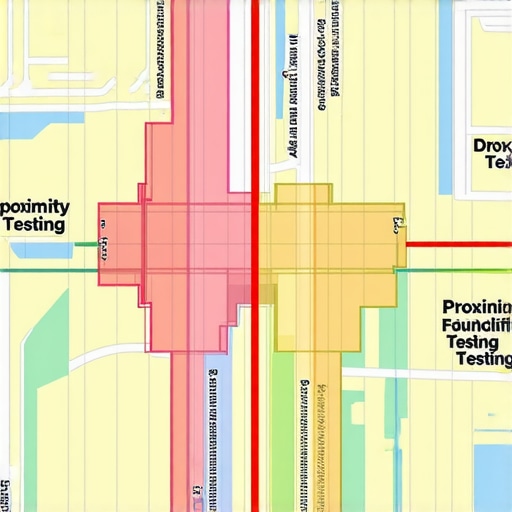
As a Local SEO Strategist with over 15 years in the trenches, I have seen the industry move from simple directory citations to complex, AI-driven proximity algorithms. Today, we are facing an “accuracy crisis.” The tools we have relied on for a decade are increasingly disconnected from the actual user experience. We are living in an era where rankings can shift from #1 to #10 within a mere 200 yards – the “2-block proximity test” proves that your data might be a localized truth but a regional lie. If you want to rank google business profile assets effectively, you must first acknowledge that your current reports might be gaslighting you.
Flaw #1: The “Average Position” Trap and Grid Drift
For years, the industry standard for reporting has been the “Average Position.” An agency tells a client, “Your average position for ‘Emergency Plumber’ is 2.4.” This sounds scientific. It sounds precise. In reality, it is a mathematical hallucination that masks the phenomenon of “Grid Drift.”
In the local landscape of 2026, Google’s proximity filter has become hyper-sensitive. We are no longer ranking for a city; we are ranking for a street corner. When you report an average, you are blending the data from the user standing in your parking lot (where you are #1) with the user three miles away (where you are #14). This average tells you nothing about your actual market reach. If you Stop Reporting Average Positions When the Map Grid is Red, you begin to see the “dead zones” where your business simply disappears.
Grid Drift occurs because Google balances three core pillars: proximity, relevance, and prominence. However, in recent algorithm shifts, proximity has been weighted so heavily that “relevance” often takes a backseat to “convenience.” A competitor with a weaker profile but a closer physical location can “drift” into your territory, pushing you out of the Local Pack for a specific neighborhood while you remain dominant in another. If your tracking tool isn’t using a high-density geo-grid (at least 13×13 pins over a 5-mile radius), you aren’t seeing the drift; you’re seeing a filtered, optimistic lie. To combat this, businesses are turning to a more sophisticated google maps ranking service that visualizes these dead zones in real-time.
The danger of the average position is that it creates a false sense of security. You might see a stable “2.4” for months while your actual “serviceable area” is shrinking. You are winning the battle for your own block but losing the war for the city. This is why your Why Your Map Grid Shows Green While the Phone Stays Silent – you are ranking where no one needs to search for you, and failing where the high-value leads actually reside.
Flaw #2: The Death of &num=100 and the Rise of “Ghost Ranks”
Technically speaking, the way we track keywords has changed forever. Historically, many local seo software solutions relied on a specific Google URL parameter: &num=100. This parameter allowed scrapers to pull 100 results at once, providing a clear, linear list of who ranked where. However, Google has systematically disabled this functionality, moving instead toward a continuous scroll and an AI-integrated interface.
This shift has given birth to “Ghost Ranks.” A Ghost Rank occurs when a tracking tool reports that your business is in “Position 4.” In the old world, Position 4 was the first result right below the Map Pack. In 2026, Position 4 often doesn’t exist in a linear fashion. It might be buried behind a “Show More” button, tucked under an AI Overview (SGE) summary, or simply omitted for certain mobile users based on their search history. The scraper sees the data in the code and reports a “4,” but a human being would have to click three times and scroll twice to find you. To the user, you are invisible. To the report, you are a success.
Recent research into search results pagination changes has shown that traditional scrapers are failing to account for “Zero-Click” environments. When Google provides the answer (or the booking button) directly in the search interface, the traditional “rank” becomes secondary to “visibility.” If your tracker isn’t simulating a mobile human journey – including the clicks required to expand the map – it is giving you Ghost Ranks. This is why many professionals are seeing that Why Map Ranks Are Up But Calls Are Down: 4 Fixes for 2026 is becoming the most common conversation in the industry. We are tracking positions that no longer correlate to human eyeballs.
Furthermore, AI Overviews are now siphoning off the “intent” traffic. A user asks, “Who is the best plumber for water heater repair near me?” and Google’s AI generates a recommendation list. This list may not match the Local Pack below it. If your google business profile ranking strategy only focuses on the pack and ignores the AI citation source, your keyword data is only telling half the story – and the less important half at that.
Flaw #3: The 30% Attribution Gap in Google Business Analytics
If you rely solely on the “Insights” or “Performance” tab in your Google Business Profile dashboard, you are missing a massive chunk of your ROI. There is a documented 30% attribution gap in how Google tracks – or fails to track – local leads. This is the “Lies of 2026” that most agencies are too afraid to tell their clients because it complicates the reporting process.
The gap exists because of “Fragmented Conversion Paths.” A user finds your business on Google Maps while driving. They see your 5-star rating and your recent posts. They don’t click the “Call” button on the profile. Instead, they memorize the name, arrive at their destination, and then type your business name directly into Safari or Chrome to find your website. Or, they simply use the “Directions” feature, arrive at your store, and make a purchase. In both scenarios, the initial discovery happened via google maps seo, but the “conversion” is attributed to “Direct” traffic or “Branded Search.”
As I often tell my consulting clients: “If you are only reporting what the GBP dashboard shows, you are leaving 30% of your agency’s value on the table.” You are essentially under-reporting your own success. Conversely, if you aren’t using advanced call tracking and UTM parameters on every single link (including the “Appointment” and “Menu” links), you have no way to prove that the increase in revenue is tied to your SEO efforts. This is a primary reason why How We Proved Google Business Analytics Was Missing 30 Percent of Local Leads is such a critical case study for modern marketers.
In 2026, user privacy updates (like the evolution of Apple’s ATT and the final death of third-party cookies) have made this gap even wider. Google is increasingly relying on “modeled data” to fill in the blanks. When you see a number in your dashboard, it isn’t always a hard count; it’s an estimate. If you aren’t cross-referencing this with your CRM and actual POS data, you are making multi-million dollar decisions based on a “best guess” from an algorithm that is incentivized to make its own platform look good. To get a true sense of your standing, you need a robust google maps ranking service that looks beyond the basic dashboard metrics.
How to Verify Reality: A 2026 Local Audit Checklist
So, how do you stop the lies? How do you ensure your google business profile seo is actually moving the needle? You need to move away from “set it and forget it” reporting and adopt a verification mindset. Use this checklist to audit your data accuracy:
- Use an Anonymous Preview Tool: Never trust a rank tracker without verifying a sample of keywords using a tool that mimics a specific geo-location (latitude/longitude) without being logged into a Google account. This reveals if you are being served “personalized” results that skew the data.
- Check for “Map Pin Placement” Errors: Minor errors in your map pin placement can accumulate rapidly. If your pin is even 50 feet off (e.g., in the middle of a parking lot vs. at the front door), it can affect how the proximity algorithm triggers your profile for “near me” searches. Use a google business profile audit tool to ensure your coordinates are surgical.
- Cross-Reference GSC with Map Grid Data: Compare the “Impressions” for local queries in Google Search Console with the “Views” in your GBP Insights. If your GSC impressions are skyrocketing but your Map Grid is showing red, it means you are ranking in the “Blue Links” (organic) but failing in the “Map Pack” (local). This requires a shift in strategy from standard SEO to google maps seo.
- Audit for “Ghost Ranks”: Manually search for your top 5 keywords from a mobile device. If your rank tracker says you are #4, but you have to click “More Businesses” to see your listing, your tracker is failing you.
- Implement “Lead-Back” Attribution: Ask every new customer, “How did you find us?” and compare their answer to your digital data. You will likely find the Map Data Lies: 5 Map-Based SEO Analysis Fixes for 2026 Accuracy are the only way to reconcile the human experience with the digital report.
Conclusion: Moving Beyond the Grid
The hard truth of 2026 is that local SEO is no longer a game of “ranking.” It is a game of “coverage” and “conversion.” A green grid is a vanity metric if it doesn’t result in a lead, and a red grid might be a lie if your attribution is broken. As the google maps ranking service landscape continues to evolve with AI and hyper-proximity, our reporting must evolve with it.
While tools are essential for scale, human verification and “lead-first” reporting are the only ways to maintain client trust and ensure business growth. Don’t let your data lie to you. Audit your tracking setup, acknowledge the attribution gaps, and focus on the metrics that actually impact the bottom line. If you’re ready to see the truth behind your rankings, visit seovipertools.com for a more accurate **google maps rank tracker** that cuts through the noise and delivers reality.