
Stop Chasing Top 3 Ranks Until You Fix This One Tracking Error
Stop Chasing Top 3 Ranks Until You Fix This One Tracking Error
You’ve seen the reports. Your agency or your internal team sends you a PDF every month with a big, bold “Number 1” or “Top 3” next to your primary keyword. On paper, you are winning. But when you look at your CRM, the lead flow doesn’t match the hype. Your phone is as quiet as a library at 3 AM, yet your rank tracker says you’re the king of the mountain.
As a Local SEO Expert who has audited thousands of Google Business Profiles, I’m here to tell you the uncomfortable truth: You are likely optimizing for a “Ghost Rank.”
Most business owners and even seasoned marketers are falling into a technical abyss I call the Centroid Trap. They are chasing a single data point in a world that Google has turned into a hyper-local, coordinate-based grid. If you are basing your entire google business profile seo strategy on a single-point rank tracker, you aren’t just misinformed – you’re burning your marketing budget on a delusion.
Section 1: The “Green Grid” Delusion
There is a specific kind of dopamine hit that comes from seeing a “Green Grid.” You open your local SEO tool, and there it is: a sea of 1s, 2s, and 3s. You assume that because you rank #1 at your office location, you rank #1 for the entire city. This is the fundamental error that is killing your ROI.
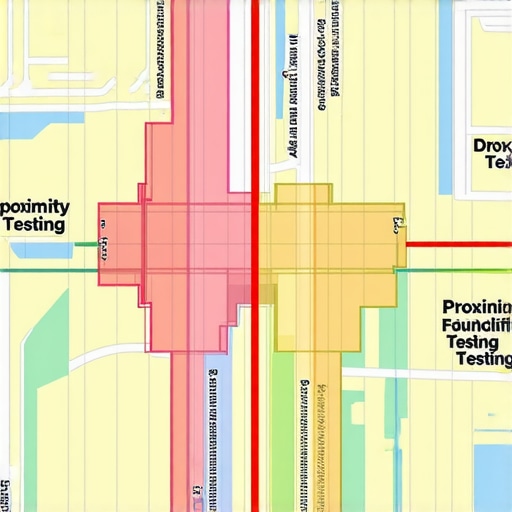
This is what we call the Centroid Trap. Traditional rank trackers often check your position from a single set of coordinates – usually the center of the city or the business’s physical address. But Google Maps doesn’t work on a “city-wide” basis anymore. Rankings are now hyper-local, often shifting dramatically every two blocks. If you are only tracking from your desk, you are missing 90% of your actual service area.
The landscape is also becoming more crowded and expensive. According to recent data from Places Scout, local pack ads – those sponsored listings that sit right on top of the organic results – jumped from less than 3% in November 2025 to a staggering 22% by January 2026. This means even if you are “Number 1” organically, you might actually be the fourth or fifth thing a user sees on a mobile screen. When you combine this with the [Why Your Map Grid Shows Green While the Phone Stays Silent] phenomenon, it’s easy to see why “Top 3” doesn’t mean what it used to.
If your tracking doesn’t account for these shifts, you are flying blind. You might be celebrating a “Green” result in a three-block radius while your competitors are eating your lunch half a mile away in the “Red Zones” you aren’t even monitoring.
Section 2: Why “Average Rank” is a Dead Metric in 2026
For years, SEOs have used “Average Position” as a Key Performance Indicator (KPI). In 2026, using average position for local search is like trying to measure the depth of the ocean with a yardstick. It’s a dead metric that hides more than it reveals.
Google’s proximity algorithm has become incredibly sensitive. The three pillars of local SEO – Proximity, Relevance, and Prominence – are now weighted heavily toward the user’s real-time location. A user searching for “emergency plumber” from a coffee shop will see a completely different Map Pack than a user searching from their home just four blocks away. This is the “Proximity Gap.”
When you look at an “Average Rank” of 2.5, that number could be comprised of a #1 rank at your office and a #20 rank two miles away. The average looks great, but the reality is that your visibility is non-existent for the vast majority of your target market. You need better local seo tools to see the granular truth of your market penetration.
Furthermore, Sterling Sky’s research has highlighted a two-year decline in click-to-call numbers across multiple industries. This isn’t because people stopped needing services; it’s because Google’s Search Generative Experience (AI Overviews) and increased monetization are pushing organic results further down the page. If you aren’t dominating the map grid with surgical precision, you are fighting for the scraps of a shrinking pie. This is why you must [Stop Reporting Average Positions When the Map Grid is Red] and start looking at the geographic spread of your dominance.
Section 3: The Anatomy of the Tracking Error
Why is your current tracking failing you? It usually boils down to three technical flaws that most “all-in-one” SEO platforms ignore.
1. Single-Location Checking vs. Coordinate-Level Tracking
Most standard rank trackers use an IP-based location or a zip code. This is too broad. Google Maps uses the specific latitude and longitude of the user. If your google maps rank tracker isn’t pinging Google from a grid of coordinates, it’s giving you a “Ghost Rank.” You need to know how you rank at the corner of 5th and Main, not just “in Chicago.”
2. Ignoring Mobile vs. Desktop Discrepancies
Local search is mobile search. Yet, many agencies still report based on desktop results because they are easier to track. Mobile rankings are influenced by movement, GPS signals, and even the speed of the user’s data connection. A desktop result is a static snapshot; a mobile result is a moving target. If you aren’t tracking mobile-specific coordinates, you are missing the context of how your customers actually find you.
3. Falling for “Ghost Ranks”
A Ghost Rank occurs when a tracking tool reports a high position that is never actually seen by real users. This happens due to personalization, search history, and Google’s “Search Along a Route” features. Without a sophisticated geo-grid, you can’t distinguish between a legitimate high-traffic ranking and a localized fluke. This is [Why Your Current Keyword Tracker Might Be Missing Hyper-Local Ranking Shifts] and why your lead volume isn’t scaling with your “rankings.”
Section 4: The Fix: Transitioning to Geo-Grid Intelligence
If you want to stop chasing ghosts and start generating calls, you have to change how you visualize your data. The solution is Geo-Grid Intelligence.
Instead of a list of keywords and numbers, you need a visual map of your performance. Here is the step-by-step fix:
- Implement a 13×13 or 15×15 Geo-Grid: Stop checking one spot. Set up a grid that covers your entire service area at quarter-mile or half-mile intervals. This allows you to see exactly where your “authority” ends.
- Audit for “Red Zones”: Look for the areas where your ranking drops from #3 to #10. These are your Red Zones. Often, these are caused by a competitor having more localized citations or “hidden” proximity signals that you haven’t addressed.
- Use Specialized Software: You cannot do this manually. You need high-end local seo software that can visualize the “Prominence Gap.” This software shows you not just where you rank, but who is beating you in specific neighborhoods and why.
The urgency here cannot be overstated. As AI Mode in search continues to shrink the organic space, the Map Pack is becoming the only “real estate” that matters for local businesses. Precision isn’t just a luxury; it’s a survival mechanism. Implementing [The Specific Grid Tweak That Finally Proves Your Map Growth Strategy] will give you the data needed to make actual moves, rather than just guessing why the phone isn’t ringing.
Section 5: Connecting Tracking to Real-World ROI
Data is useless if it doesn’t lead to dollars. The goal of fixing your tracking error isn’t just to have a prettier map; it’s to dominate your Service Area.
When you have coordinate-level data, your strategy shifts from “SEO” to “Market Domination.” You can see exactly where you need to build hyperlocal content. For example, if you are a plumber and you see a Red Zone in a specific neighborhood, you don’t just “do more SEO.” You create a landing page specifically for that neighborhood, mention local landmarks, and gather reviews from customers in that specific zip code.
This is how you get more calls from google maps. You stop trying to rank for a whole city and start winning street-by-street battles. When you fix the tracking, you can finally see [How to Actually Turn Map Views into Real Inbound Calls] because you are putting your business in front of people exactly where they are searching, with the relevance they expect.
By identifying where your prominence is weak, you can allocate your budget to “Entity Building” in those specific areas. Google isn’t just looking for a business; it’s looking for a local authority. Precise tracking tells you where you aren’t an authority yet.
Section 6: Conclusion & The 2026 Outlook
The era of “set it and forget it” local SEO is over. In 2026, the local map pack is smaller, more monetized, and more competitive than ever before. If you are still relying on average position or single-point tracking, you are essentially gambling with your business’s future.
The “Centroid Trap” is the silent killer of local marketing campaigns. By shifting to geo-grid intelligence and focusing on coordinate-level visibility, you move beyond vanity metrics and into the realm of real, predictable ROI. Don’t let another month go by where you celebrate “Green” ranks while your revenue plateaus. Audit your tracking, find your Red Zones, and reclaim your service area.
If you’re ready to see the truth about your rankings, it’s time to [Contact Us] and get a real look at your local footprint.