Why Your Current Keyword Tracker Might Be Missing Hyper-Local Ranking Shifts
Why Your Current Keyword Tracker Might Be Missing Hyper-Local Ranking Shifts
If you are looking at a monthly SEO report and seeing a sea of green “Position #1” rankings while your phone remains silent, you aren’t just experiencing bad luck – you are likely being lied to by your software. In the world of 2026 google business profile seo, the traditional concept of “ranking” is dead. If your tracker tells you that you are #1 in “Chicago,” but doesn’t tell you that you are #14 three blocks away from your office, your data is obsolete.
As a Local SEO expert, I have seen countless agencies and business owners fall into the “Invisible Local Ranking Gap.” This gap exists because traditional keyword trackers rely on a “Zip Code Fallacy.” They ping Google from a single static point – usually a data center or a city-center centroid – and assume that result represents the entire city. It doesn’t. In reality, Google’s proximity-based algorithm is now so hyper-sensitive that your visibility can evaporate the moment a potential customer crosses the street.
We are living in the era of “Zero-Click Searches,” where AI overviews and the local Map Pack capture the vast majority of intent-driven traffic. If you aren’t visible in the hyper-local “vicinity” of the user, you don’t exist. To master this landscape, you must understand why your current tools are failing and how to adapt to hyperlocal seo shifts that happen in real-time. For more foundational knowledge, see our guide on Mastering SEO Insights: Actionable Tips for 2025.
The Proximity Trap: Why the “2-Block Test” Matters
The most significant shift in local search over the last year is the tightening of the “proximity radius.” In 2026, Google’s “Proximity Ranking Signals” have become the dominant factor in the local algorithm, often outweighing traditional authority signals like backlinks or even review counts. This has created what I call the “2-Block Test.”
Imagine a user searching for a “personal injury lawyer” while walking down a busy metropolitan corridor. At Block A, your firm might appear at the top of the Map Pack. By the time that user reaches Block C – just two blocks away – your listing may have dropped to position #15, replaced by a competitor whose office is 100 yards closer. Traditional trackers, which use IP-based pings or static GPS coordinates, completely miss these micro-shifts. They provide a “macro” view of a “micro” problem.
Most gmb seo tools fail to capture the 2-block proximity shift because they aren’t designed to mimic human movement. They simulate a search from a fixed point, giving you a false sense of security. To combat this, utilizing a robust google maps rank tracker is essential for accuracy. Without multi-point data, you are essentially flying a plane with a radar that only updates once every hundred miles. You’ll miss the mountains until you hit them. For a deeper dive into this phenomenon, read Why Your Map Ranks Shift Every Two Blocks and How to Verify the Data.
Grid Tracking vs. List Tracking: The 2026 Standard
If your SEO provider is still sending you a PDF with a list of keywords and a single ranking number next to them, they are using 2015 tactics in a 2026 world. List tracking is a vanity metric. It provides an “average” that hides the truth. If you rank #1 at your office front door but #20 everywhere else in the city, your “average” might look acceptable, but your ROI will be non-existent.
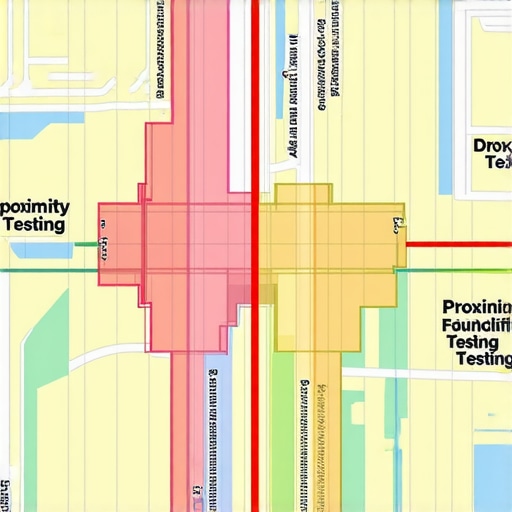
Modern local SEO requires geo-grid visualization. A grid shows you a literal map of your city with data points every 500 meters (or less). This allows you to see your “coverage area” rather than just a single data point. In 2026, map visibility requires “spatial and contextual signals.” Google is no longer just looking at “who is the best plumber,” but “who is the best plumber right here, right now for this specific user’s context.”
This is where local seo tools become a non-negotiable asset for agencies. A grid allows you to identify “ranking dead zones” – areas where your prominence drops off sharply. Often, these dead zones aren’t caused by a lack of keywords, but by a lack of “spatial authority” or a competitor who has optimized their profile for that specific neighborhood’s nomenclature.
Industry-Specific Impact: From Plumbers to Med Spas
The “Invisible Gap” doesn’t affect every industry the same way. Depending on your niche, the proximity algorithm treats your google business profile seo differently.
Contractors and Plumbers: The Service Area Struggle
Service Area Businesses (SABs) are the biggest victims of poor tracking. A plumber doesn’t have a storefront, yet Google still anchors their ranking to a specific verification address (even if hidden). I’ve seen plumbers with 500+ five-star reviews lose out to a “newbie” with 10 reviews simply because the newbie is physically closer to the searcher. To rank google business profile listings for SABs, you must track across the entire service area, not just the city center. Many contractors wonder Why Plumbers Lose Map Rankings Even With Hundreds of Reviews; the answer is almost always a failure to account for proximity decay.
Med Spas and Dentists: The Proximity Test vs. Ad Spend
For high-ticket local services like Med Spas or Dentists, the “Proximity Test” is brutal. Because these are high-competition niches, Google often fills the top of the mobile screen with 4 ads and an AI summary. This leaves only three spots in the Map Pack. If your tracker isn’t showing you exactly where you fall out of those top three spots, you are wasting your marketing budget. To truly rank higher on google maps, these businesses must look beyond city-center data and optimize for the specific high-wealth zip codes they serve.
Lawyers: The Prominence Gap
In the legal world, “Prominence” (your offline reputation and online authority) can sometimes override “Proximity.” However, even the most authoritative law firm will see their rankings dip in favor of a closer competitor if their profile isn’t optimized for local relevance. Tracking the “Prominence Gap” requires seeing how far your “ranking bubble” extends compared to your competitors.
The ROI Disconnect: When “Green” Grids Lead to “Quiet” Phones
The most frustrating conversation an agency owner can have is explaining to a client why their phones aren’t ringing despite a “perfect” ranking report. This is the ROI Disconnect, and it’s usually caused by “Ghost Ranks.”
Ghost Ranks are rankings that appear in automated tools but are never actually seen by real users. This happens because many local seo tools do not account for the “Searcher Context.” Google knows if a user is driving, walking, or sitting at home. It knows their search history. If your tracker is just a “dumb” bot, it’s seeing a version of the web that doesn’t exist for your customers.
Furthermore, there is a massive “Attribution Gap” in Google Business Analytics. Many calls and directions requests are happening directly from the Map Pack without the user ever visiting your website. If you aren’t using local seo performance software that can correlate hyper-local grid shifts with actual lead volume, you are only seeing half the story. You might find yourself asking: Why Map Ranks Are Up But Calls Are Down: 4 Fixes for 2026.
Action Plan: How to Audit Your Current Tracking Setup
Stop relying on faith and start relying on verifiable data. If you want to rank higher on google maps, you need to audit your current tracking setup immediately. Here is the 3-step protocol I recommend to all my clients:
- Perform a Manual “Incognito” Audit: Don’t just trust your dashboard. Take your phone, disable your WiFi (to avoid IP-based bias), and physically drive 2-3 miles away from your business. Perform a search. Does your business still appear in the top 3? If not, your “Position #1” report is a localized bubble.
- Audit Your Profile Optimization: Improving your google business profile optimization requires seeing the full geo-grid. Check your primary and secondary categories. Are they aligned with the specific neighborhoods where your ranking “drops off”? Often, a simple category tweak can expand your ranking radius by miles.
- Switch to a Multi-Point Ranking System: Stop using list-based trackers. Switch to a google maps ranking service that utilizes multi-point grid data. This is the only way to see the “fringe” areas where you are losing business to inferior competitors.
By identifying the 5 Data Points Most Audit Tools Miss When Analyzing Local Map Grids, you can begin to reclaim the territory you didn’t even know you were losing.
Conclusion
The local map pack seo landscape of 2026 does not reward those who settle for “average” data. If your current keyword tracker is missing hyper-local shifts, you aren’t just losing rankings – you are losing revenue to competitors who understand the “2-block” reality of modern search. Don’t let a “Position #1” report hide a failing local strategy. Audit your hyper-local presence today and ensure your google business profile seo is built for the reality of the street, not the vacuum of a data center.
Ready to see the truth about your rankings? Contact Us for a professional, hyper-local audit of your Google Business Profile.