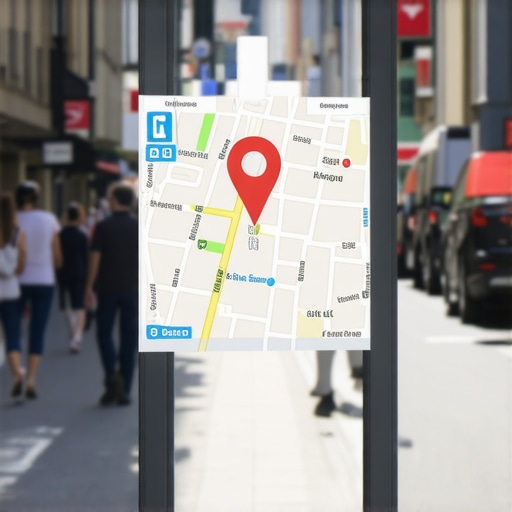
The Specific Map Embed Placement That Actually Helps Your Local Visibility
The Specific Map Embed Placement That Actually Helps Your Local Visibility
In the world of local search, the stakes have never been higher. For any local service business – whether you are a plumber in Phoenix or a personal injury lawyer in Chicago – the Google Map 3-Pack is the ultimate prize. Recent data suggests that the Map 3-Pack captures between 40% to 50% of total clicks for searches with local intent. When someone searches for “emergency dentist near me,” they aren’t looking at the organic results on page two; they are looking at the map.
However, despite the clear dominance of the map pack, many business owners and even some SEO professionals treat the technical implementation of Google Maps on their websites as an afterthought. They view it as “visual fluff” – a helpful widget to show customers where the office is, but nothing more. This is a critical mistake in google business profile seo. With over 80% of local searches resulting in a conversion (a phone call, a website visit, or a physical store visit), every signal you send to Google’s algorithm must be intentional.
If you have been struggling to move the needle on your local rankings, it might not be your citations or your reviews. It might be your map embed strategy. In this guide, I will break down why the standard “footer embed” is failing you and reveal the specific map placement strategy that actually drives local visibility. We will explore how to align your website structure with Google’s core local ranking factors: Proximity, Relevance, and Prominence.
Why Most Map Embed Tactics Fail to Improve Local Search Visibility
II. The “Footer Fallacy”: Why Global Embeds Aren’t Enough
The most common advice in local SEO is to “put your map in the footer.” The logic seems sound: by placing the map in the footer, it appears on every single page of your website. This ensures sitewide NAP (Name, Address, Phone) consistency and gives Google a constant reminder of where you are located. While this is a “best practice” baseline, it is far from an advanced strategy to rank google business profile listings in competitive markets.
The problem with footer embeds is that they lack contextual relevance. Google’s algorithm is increasingly sophisticated; it doesn’t just look at whether a map exists; it looks at *why* it is there. A sitewide footer embed is a “global” signal. It tells Google where the business is, but it doesn’t help Google understand which specific services are tied to that location in a granular way.
Static Embeds vs. Dynamic Knowledge Graph Signals
Most businesses simply copy the standard iframe code from Google Maps. While this is better than nothing, it is a “static” signal. To truly optimize your google business profile optimization, you should be looking at using your Knowledge Graph ID (KG ID) or specific search query URLs within your embeds. When you embed a map based on a specific search for your business name and city, you are reinforcing the connection between your brand entity and its physical location in the Google Knowledge Vault.
Furthermore, footer embeds can sometimes dilute the focus of a page. If you have a page specifically about “Water Heater Repair,” but the footer contains a generic map of your entire service region, you aren’t providing the tightest possible topical-to-spatial relevance. Top-tier local SEO requires moving beyond the footer and into the heart of your content.
III. The Contact Page: The Baseline Requirement
Before we get into the “secret weapon” placement, we must address the Contact page. This is the digital “handshake” between your website and Google Maps. For many businesses, the Contact page is the only place where Google expects to find a high-concentration of location data. If your Contact page doesn’t have a map, you are missing the most basic gmb ranking service requirement.
Your Contact page embed should not just be a pin on a map. It should be a fully optimized “Find Us” section that includes:
- An official Google Map embed (preferably shared directly from your GBP listing).
- Exact NAP data that matches your Google Business Profile to the letter.
- Your official opening hours (using Schema.org markup).
- Driving directions from major local landmarks.
This page acts as the anchor for your local identity. When Google crawls this page, it should see a perfect mirror of what is on your Google Business Profile. If there is a discrepancy – even something as small as “Suite 100” vs “#100” – you risk confusing the algorithm and dampening your “Prominence” score.
Beyond Citations: The Modern Way to Verify Your Local Backlink Strategy
By ensuring your Contact page is a fortress of local data, you create a foundation that allows your other pages to perform better in the map pack.
IV. The Secret Weapon: Contextual Embeds on Service Pages
Now we come to the strategy that actually moves the needle: Contextual Service-Location Embeds. This is the specific placement that most of your competitors are ignoring. To rank higher on google maps, you need to prove to Google that you are the most relevant result for a specific service in a specific area.
Imagine you are a law firm with three main practice areas: Criminal Defense, Family Law, and Personal Injury. Most firms have one map in the footer. Instead, you should have a unique map embed on each of those service pages. But not just any map – an embed that is tailored to that service.
The Power of Proximity and Relevance
The Google Map Pack algorithm relies on three pillars: Proximity (how close you are to the searcher), Relevance (how well your business matches the search query), and Prominence (how well-known your business is). By placing a map embed on a “Personal Injury” service page, you are explicitly linking the Relevance of that keyword to the Proximity of your office.
When Google’s bot crawls your “Personal Injury” page and sees a map embed of your office alongside 1,000 words of high-quality content about injury law in your city, the signal is undeniable. You aren’t just a business in that city; you are the *authoritative source* for that specific service at that specific location. This is a core component of a high-level local map pack seo strategy.
Why Most City Landing Pages Fail to Turn Clicks Into Service Calls
Data Point: The Stability of the Grid
In our testing, we have found that businesses using contextual embeds on service pages see more stable rankings. Local map ranks are notoriously volatile; they often shift every two blocks (the “2-Block Rule”). However, reinforcing the relevance signal on specific service pages helps stabilize your “pin” in those tight competitive grids, ensuring you don’t disappear when a searcher moves a few hundred yards away.
V. Multi-Location & Service Area Business (SAB) Strategies
What if you don’t have a physical storefront? Or what if you have ten different offices? This is where google business profile seo gets complicated. For Service Area Businesses (SABs), like locksmiths or mobile detailers, you cannot simply embed a map of your office because your address is hidden. Similarly, multi-location businesses often struggle with “cannibalizing” their own rankings.
Topical Child Pages for SABs
For an SAB, the strategy is to create “topical child pages” for the major suburbs or neighborhoods you serve. Instead of a standard address embed, you should embed a map that shows your service area polygon. This is done by sharing the map link directly from your GBP “view on maps” screen while your service area is active. This tells Google, “I provide these specific services within this specific boundary.”
Multi-Location Silos
For businesses with multiple offices, each location must have its own “Location Landing Page.” Each page should feature an embed of *only* that specific Google Business Profile. Never embed a map of “Office A” on the landing page for “Office B.” This seems obvious, but it happens frequently when templates are used across a site. To rank in google map pack for multiple cities, your site must be a collection of localized silos, each with its own unique map and NAP data.
How to Fix Service Area Pages That Attract Traffic But Zero Real Leads
VI. Technical Execution: How to Embed for Maximum Authority
The “how” is just as important as the “where.” If you want to leverage local seo software and gmb seo tools effectively, you need to understand the technical side of the embed. Do not just grab the first iframe you see.
Use the Official Share Link
Go to Google Maps, search for your business name (not just your address), and click “Share.” Then select “Embed a map.” By searching for your business name first, the resulting iframe code will contain your unique CID (Customer Identification) number. This CID is the “social security number” of your business in Google’s database. Using it ensures that all the “link juice” and relevance signals are passed directly to your GBP listing.
Pairing with Local Schema Markup
A map embed is a visual signal, but Schema markup is the underlying data signal. You should always pair your map embed with `LocalBusiness` or `ProfessionalService` schema. Specifically, use the `hasMap` property within your JSON-LD. This property allows you to explicitly tell Google’s crawler: “Here is the URL of our map.” When the crawler sees the `hasMap` URL matches the iframe on the page, it creates a powerful confirmation of your location data.
This technical synergy is what separates a basic website from one that uses advanced google business profile seo to dominate the local market.
VII. Measuring the Impact: Beyond the Map Pin
Once you have implemented contextual map embeds across your service pages and optimized your Contact page, you must track the results. A map embed is only as good as the data proving it works. Traditional SEO tools often fail to capture the nuance of local search because they track rankings from a single data point (the center of a city).
To truly see if your map placement strategy is working, you need to use a google maps rank tracker that provides a grid-based view of your rankings. This allows you to see how your “visibility radius” expands over time. Are you starting to show up in the 3-pack four miles away instead of just two? That is the sign of increasing “Relevance” and “Prominence.”
Why Most Map Rank Tracking Tools Fail the 2-Block Proximity Test
Remember, local SEO is not a “set it and forget it” task. As Google updates its algorithm and as competitors move into your space, you must continue to refine your location signals. Audit your map placements today. Move them out of the “visual fluff” category and into your core strategic arsenal.
Shahid Anwar – Local SEO & GMB / Google Business Profile Expert
Connect with me on LinkedIn
I’m Shahid Anwar, a Local SEO & Google Business Profile specialist. I help local and multi-location businesses turn Google Maps and local search visibility into consistent, high-quality leads. With years of experience navigating the complexities of the local algorithm, I focus on data-driven strategies that go beyond the basics to deliver real-world ROI.