Beyond Citations: The Modern Way to Verify Your Local Backlink Strategy
Beyond Citations: The 2026 Local Backlink Verification Framework
If you are still obsessing over NAP (Name, Address, Phone number) consistency as the primary driver of your local rankings, you are operating on a playbook that expired years ago. In 2026, the local search landscape has shifted from a volume-based game to a verification-based science. As a Local SEO consultant, I see it every day: business owners and agencies frustrated because they’ve built 200 “high-quality” citations, yet their Google Business Profile (GBP) remains buried on page three of the map pack.
The reality is that citations have become the “table stakes” of local search. They are the bare minimum required to prove you exist, but they no longer provide the competitive edge needed to dominate a dense metropolitan market. We have entered the era of the Local Backlink Verification Framework – a methodology that prioritizes entity prominence and hyper-local relevance over the sheer quantity of directory listings.
In this guide, I will break down why the “citation-only” mindset is dead and how you can implement a modern strategy to improve google maps rankings by focusing on what Google actually values in 2026: verifiable local authority. For a deeper look at why your current efforts might be stalling, read more about The Prominence Gap: Why High-Traffic Competitors Still Dominate Your Local Map Pack.
II. Why Citations Are No Longer Moving the Needle
For over a decade, the SEO industry preached that the more places your business was mentioned, the higher you would rank. This led to a massive influx of “citation building” services that flooded the web with low-value data on obscure directories that no human ever visits. Google’s algorithm has grown wise to this. Today, Google’s AI-driven local algorithm, part of the broader google business profile seo ecosystem, can distinguish between a “Brand Citation” and “Directory Noise.”
Google’s primary goal is to provide users with a reliable, prominent business. They now verify your business’s legitimacy through multiple high-trust vectors: government records, utility bills, official social media footprints, and high-authority local news. When you submit your business to a generic “Business Directory 4U” site, Google’s “Link Valuation” system likely assigns it a value of near zero. It doesn’t provide a signal of prominence; it provides a signal of automated spam.
Furthermore, the shift toward “Prominence” means that Google is looking for engagement and real-world signals. A single link from a local community college or a neighborhood association carries more weight than 50 generic citations because it places your business within a specific geographic and topical context. If you find your rankings are stagnant, it’s likely because your strategy lacks these high-impact signals. You can learn more about this in our analysis: Why Your Local Backlink Strategy Isn’t Moving the Needle on Maps.
III. The Modern Local Backlink: Quality Over Quantity
So, what defines a “modern” local backlink? It isn’t just about the Domain Authority (DA) of the linking site. In local SEO, we prioritize Geographic Authority and Topical Relevance. A modern backlink is a digital verification that your business is a pillar of its local community.
To rank google business profile assets effectively in 2026, we look for “Hyper-Local” links. These include:
- Local news outlets and neighborhood blogs.
- Sponsorships of local sports teams or charity events.
- Niche-specific directories that require manual verification (e.g., state-level bar associations for lawyers or trade-specific boards for HVAC contractors).
- Partnerships with non-competing local businesses.
The 2-Block Proximity Test
One of the most critical technical concepts I use with my clients is the “2-Block Proximity Test.” Google’s proximity filter has become incredibly aggressive. In many competitive niches, your visibility might drop off significantly just two blocks away from your physical location. Modern local backlinks act as a “proximity stretcher.” By gaining mentions and links from entities physically located in the surrounding neighborhoods, you signal to Google that your relevance extends beyond your immediate doorstep. Most standard tools fail to measure this accurately; see Why Most Map Rank Tracking Tools Fail the 2-Block Proximity Test for a technical breakdown.
IV. The Verification Framework: How to Audit Your Strategy
Building links is only half the battle. In 2026, you must verify that your links are actually contributing to your “Map Grid” visibility. Many agencies report “success” based on total link counts, but if those links don’t move your pins in a google maps rank tracker, they are worthless. Here is my 3-step verification framework:
Step 1: Check for “Ghost Ranks”
A “Ghost Rank” occurs when an SEO tool shows you ranking #1, but a real-world search from a mobile device in that same area shows you at #5 or lower. This usually happens when the tool uses a static IP or a non-localized browser environment. You must verify your ranks using a localized grid that mimics real-user movement.
Step 2: Analyze Competitor Profile Changes
If a competitor suddenly jumps to the top spot, it’s rarely a coincidence. You need to audit their profile changes – did they update their categories? Did they get a mention in a local “Best Of” list? By using a google business profile audit tool, you can correlate their rank jumps with specific backlink acquisitions or profile optimizations. Check out our guide on How to Spot the Exact Profile Changes That Sent Your Competitor to the Top Spot.
Step 3: Correlate Link Velocity with Map Pack Visibility
Are your rankings expanding geographically after a link building campaign? If you’ve acquired five local links but your “ranking radius” hasn’t expanded by at least 10-15%, your links lack the necessary geographic signals. You need better local seo tools to visualize this data over time.
V. Tools of the Trade: Automating Verification in 2026
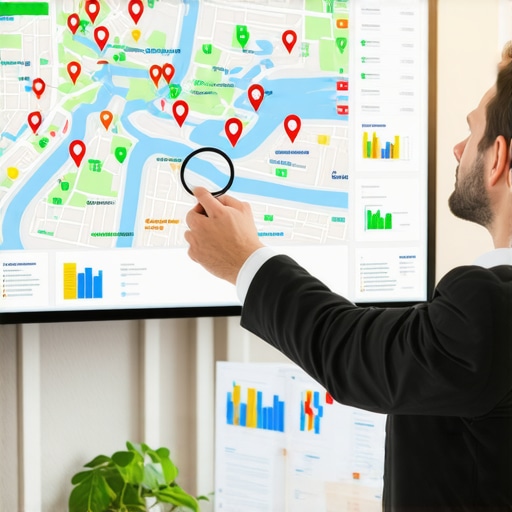
The manual auditing of local ranks is a thing of the past. To survive in 2026, you need local seo software that provides granular, grid-based data. You cannot rely on a single “average rank” metric. You need to see how your business performs at every intersection in your target city.
I recommend using SEO Viper Tools for this level of precision. Unlike legacy trackers, modern systems like SEO Viper allow you to see the “Map Grid Drift” – the way your rankings fluctuate throughout the day based on user proximity and competitor activity. If you aren’t using a high-fidelity tracker, you are essentially flying blind. For a list of what my team uses daily, see The Map Tracking Tools We Actually Use to Verify Hyper-Local Ranks.
VI. Industry-Specific Tactics
A “one size fits all” approach to local backlinks is a recipe for failure. The signals Google looks for in a personal injury law firm are vastly different from what it looks for in a local pest control company. For example, 7 Specific Citations That Help Pest Control Companies Rank in Neighboring Towns are still valuable, but they must be supported by hyper-local blog mentions to truly move the needle in 2026.
Contractors should focus on project-based links (e.g., being mentioned on a supplier’s “featured projects” page), while lawyers need high-authority legal directories and mentions in local news regarding community involvement. The “Verification” aspect remains the same: ensure the link is geographically tied to your service area.
VII. Conclusion & CTA
The days of set-it-and-forget-it citations are over. To dominate the Google Map Pack in 2026, you must treat local link building as a verification process. Every link you acquire should serve as a digital “proof of presence” that signals both relevance and prominence to Google’s algorithm. Stop relying on outdated metrics and start auditing your strategy with the precision that modern local SEO demands. If you’re ready to take your visibility to the next level, use a professional google maps ranking service to ensure your business stays ahead of the competition and at the top of the map pack.