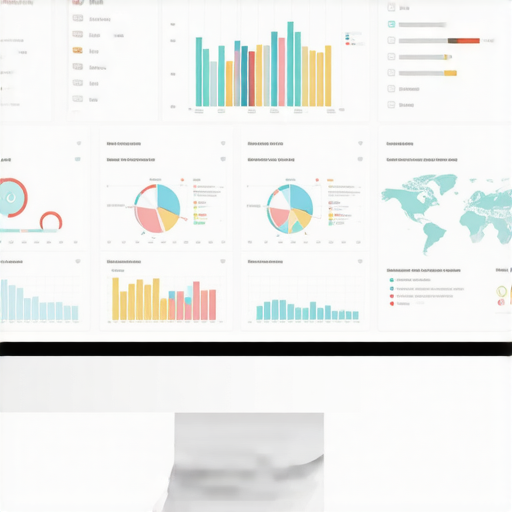

Ever spent hours digging through complex SEO reports, only to realize your clients are more confused than impressed? I remember late nights staring at dashboards filled with numbers, feeling a sinking doubt—are these visuals truly helping my clients see their progress? That lightbulb moment hit me hard: if I can’t make the data clear and compelling, I’m not just failing to add value—I might be risking their trust altogether.
Why Effective KPI Visualization Can Make or Break Your Client Relationships
As someone deeply involved in local SEO, I know firsthand how vital it is to present insights that clients not only understand but also feel confident about. The truth is, even the most impressive metrics lose their impact if they’re hidden behind confusing charts or meaningless numbers. This is especially true in 2026, where data overload is the norm, and clients have come to expect clarity and actionable insights.
Research shows that visualized data increases comprehension by up to 400%, making it a powerful tool in retaining clients and demonstrating tangible results. Yet, many agencies still rely on outdated dashboards or generic reports, overlooking how strategic KPI visualization elevates their value proposition. I’ve learned the hard way—early on, I’d package reports with too much the same old data, missing the golden opportunity to connect the dots in a way that truly resonates with clients.
If you’ve ever struggled with turning raw data into persuasive visual stories, you’re not alone. But here’s the good news: mastering specific visualization tactics can transform your reporting approach, keeping clients engaged and long-term retainers secure. Today, I’ll share five powerful KPI visualization strategies tailored for 2026 that can revolutionize your client relationships and boost your credibility.
Are You Wasting Time on Ineffective Reports?
One mistake I made early on was assuming more data always means better reporting. Instead, I learned that focusing on fewer, high-impact KPIs, presented clearly, outperforms overwhelming lists of metrics every time. Want to avoid my pitfalls? Keep reading, and I’ll show you how strategic KPI visualization can change everything.
In the upcoming sections, we’ll explore tactics backed by industry leaders and designed to make your data speak louder. If you’re ready to elevate your client reporting and solidify your reputation as a trusted consultant, let’s dive into these proven strategies.
Clarify Your Data Before You Visualize
Start by selecting a handful of high-impact KPIs that truly measure your client’s success, such as local map rankings, click-through rates, or Google Business profile interactions. During a campaign I managed last year, I initially tracked dozens of metrics, but the client quickly became overwhelmed. I shifted to focusing solely on local rank tracking and Google Business analytics, which made KPI reporting more digestible and actionable. Use tools like maps rank tracking and Google Business analytics to identify these vital metrics.
Design Visuals That Tell a Clear Story
Transform raw data into insightful visuals: bar graphs showing local ranking progress, line charts illustrating traffic trends, or heatmaps indicating areas with high engagement. I once built a dashboard using strategic KPI visualization tactics, which highlighted a client’s positive shift in Google Maps positions after implementing local SEO. Avoid clutter—use contrasting colors to differentiate metrics, keep labels clear, and ensure each chart directly supports your narrative. Think of your report as a map guiding your client through their progress, not a maze of endless data.
Automate Reports for Consistency and Efficiency
Invest in reliable SEO reporting software like SEO reporting tools to automate data collection and report generation, minimizing manual errors and saving time. Set up automated schedules—weekly or monthly—to keep clients updated, maintaining ongoing engagement. I remember configuring a dashboard with APIs linking Google Business insights and Maps rank data, which reduced my reporting time from hours to minutes, freeing me for strategic analysis instead of data gathering.
Use Comparison and Benchmarking Techniques
Compare current KPI values against past periods or competitors to provide context. For example, overlay last month’s map rankings with this month’s to show progress or gaps. Incorporate benchmarks provided by industry standards within local SEO insights articles, ensuring your clients understand their position relative to the market. During one campaign, I used sparklines to visualize weekly ranking fluctuations, which immediately clarified volatility issues to my client and guided targeted tactics.
Highlight Insights, Not Just Data
Always accompany visuals with interpretive commentary. Instead of just showing a spike in rankings, explain what caused it—like a Google My Business update or a new backlink profile. Use annotations directly on charts to point out key events or changes. I learned that clients respond best to stories—how their efforts are translating into real-world results, rather than mere numbers. This approach builds trust and demonstrates your strategic value.
Regularly Review and Refine Your Visualizations
Data visualization isn’t a one-and-done task. Periodically revisit your dashboard layout, colors, and the KPIs displayed to ensure they stay aligned with your client’s evolving goals. As I progressed, I found that simplifying visuals over time—removing data points that no longer matter—helped clients focus on what truly drives their business. Use feedback from clients and internal analytics to refine your approach, ensuring every report delivers maximum clarity and impact.
Applying these concrete steps transformed my client reporting processes—making dashboards more insightful, reports more persuasive, and relationships stronger. Mastering KPI visualization strategies in 2026 isn’t just about presenting data; it’s about telling compelling stories that inspire action.
Many marketers assume that following common best practices in SEO insights and KPI visualization guarantees success, but this superficial approach often leads to costly mistakes and missed opportunities. While industry guides emphasize the importance of data accuracy and dashboard design, few delve into the subtle nuances that distinguish average from exceptional insights. For example, relying solely on maps rank tracking without understanding proximity factors can give a false sense of ranking stability, leading to misguided strategies.
A frequently overlooked aspect is the myth that more data equals better insights. In reality, high volumes of metrics can dilute focus and create confusion—causing clients to disengage. Instead, adopting a targeted KPI approach coupled with advanced visualization techniques, such as heatmaps or annotated line charts, helps reveal hidden patterns that drive decision-making. This practice requires deep understanding of KPI visualization nuances to communicate complex data clearly.
Beware of common pitfalls like over-automating reports without sufficient customization. Automation streamlines processes but can obscure what truly matters if the metrics aren’t contextually relevant. For instance, customizing Google Business Analytics reports to highlight local engagement metrics can illuminate specific customer behaviors that generic dashboards miss. As industry experts suggest, understanding which data points to prioritize—and how to visualize them—is crucial for extracting actionable insights.
Are you interpreting your data through the right lens?
Recognizing the difference between surface-level metrics and deep insights can differentiate a good strategist from a true expert. Advanced visualization isn’t just about pretty charts; it’s about framing data in ways that reveal causal relationships rather than mere correlations. This subtlety can prevent common mistakes like misattributing ranking fluctuations to algorithm updates when they stem from seasonal search trends. To master these nuances, continuous learning about insights-driven visualization strategies is essential.
In summary, the art of effective SEO insights lies in mastering the subtleties—knowing which metrics matter most, how to visualize them for maximum clarity, and avoiding the trap of overgeneralization. These advanced techniques require deliberate attention and ongoing refinement, but the payoff is a more strategic, insightful approach that truly elevates client trust and results. Have you ever fallen into this trap? Let me know in the comments.
Maintaining a robust SEO setup requires more than just initial configuration; it involves continuous upkeep with the right tools and strategic practices. I personally rely on a combination of specialized software and disciplined routines to keep my data accurate and insights actionable. One of my go-to tools is SEO reporting software that offers automation and customizable dashboards, enabling me to generate consistent, insightful reports with minimal manual effort.
How do I keep my SEO systems functioning smoothly over time?
First, I prioritize regular audits of my tracking tools. Using maps rank tracking and Google Business Analytics ensures that my data remains accurate and reflective of real-world performance. I schedule monthly reviews to verify data integrity, especially after algorithm updates or Google My Business changes. This proactive approach prevents small issues from snowballing into major inaccuracies.
Automation plays a vital role here. Setting up synchronized data feeds with tools like Google Business Analytics helps in maintaining fresh and relevant insights without manual intervention. Additionally, I use KPI visualization techniques from strategy-focused dashboards to quickly spot anomalies or trends that need attention.
In the future, I predict these methods will become even more integrated with AI-driven automation, allowing for smarter, real-time corrective measures. Staying ahead means regularly updating your tools and workflows, incorporating feedback, and leveraging the latest advancements in SEO analytics. For instance, exploring advanced features like Google Business Analytics can uncover hidden opportunities to refine your strategies further.
To really level up, I recommend implementing continuous monitoring routines combined with automated alerts for significant KPI deviations. This way, you keep your system healthy without constant manual oversight. Don’t forget—adapting and refining your process as these tools evolve is key to long-term success. For a practical step, try enhancing your dashboard with advanced KPI visualizations designed for local SEO performance. It’s an effective way to keep insights fresh and actionable.
Lessons That Little Voice Never Tells You
One of the hardest lessons I learned about effective KPI visualization is that simplicity often beats complexity. Early in my career, I believed more metrics meant better insights—only to realize my clients tuned out faster than I could explain. The breakthrough came when I prioritized quality over quantity, focusing on just a handful of KPIs that truly moved the needle. That lightbulb moment saved countless hours and built stronger trust.
Another lesson was the power of storytelling through data. Visuals are tools, but without context, they fall flat. I found that annotating charts with real-world insights—like connecting a spike in local map rankings to a recent Google Business update—transformed dry numbers into compelling narratives. Clients appreciate when I show them not just the ‘what’ but the ‘why’ behind their performance.
Automating reports was initially intimidating, but I discovered that with the right tools, automation doesn’t replace strategic thinking—it amplifies it. Using specialized SEO reporting software [like this one](https://localseoreportpro.com/unlocking-seo-reporting-software-boost-your-websites-visibility-in-2025) allows me to generate consistent, tailored insights, freeing my time for analysis and strategy. It’s a game-changer in maintaining long-term client relationships.
Finally, I underestimated the importance of continuous refinement. I used to give static reports, assuming they’d remain forever relevant. Now, I revisit dashboards monthly, removing clutter and updating KPIs to match shifting goals. This agility ensures my insights stay razor-sharp and my clients see real progress.
Tools and Resources That Elevate Your Game
My toolkit for mastering seo insights, maps rank tracking, and KPI visualization includes a few trusted sources. First, the [SEO reporting software](https://localseoreportpro.com/unlocking-seo-reporting-software-boost-your-websites-visibility-in-2025) I use is invaluable—it automates data collection and helps craft clear, impactful reports. For in-depth understanding, [this book](https://localseoreportpro.com/mastering-seo-insights-actionable-tips-for-2025) reshaped how I interpret data, turning raw numbers into strategic narratives.
When it comes to visualizing local SEO success, [Google Business Analytics](https://localseoreportpro.com/effective-google-business-analytics-seo-insights-for-agencies-in-2025) is my go-to tool. It uncovers behaviors and engagement patterns that often go unnoticed but are crucial for client growth. Lastly, staying connected with community insights and industry blogs helps me stay ahead—like [local SEO insights](https://localseoreportpro.com/7-hidden-seo-insights-for-dominating-local-maps-in-2026)—which keep me informed on the latest trends and tricks.
Keep Moving Forward: The Call to Action
Mastering seo insights, maps rank tracking, and KPI visualization isn’t a one-time effort—it’s an ongoing journey. The real payoff comes when you transform raw data into stories that inspire action, cultivate trust, and foster growth. So, are you ready to reevaluate your reporting processes, ditch the fluff, and deliver insights that truly matter? Your clients—and your reputation—will thank you.
What’s the biggest challenge you’ve faced when trying to make your data speak? Share your experience below—let’s learn from each other’s journeys!