
I remember a moment early in my digital marketing journey when I poured hours into analyzing maps rank data, only to discover it was utterly off. My client’s local rankings mysteriously dropped, but I couldn’t quite pinpoint why. That lightbulb moment made me realize: not all data is trustworthy, and in the world of local SEO, accuracy can make or break your reputation.
Now, with 2026 shaping up to be a crucial year for local search dominance, ensuring your map rankings are legit is more vital than ever. Today, I want to share with you the top five verification fixes I’ve learned through my own trial and error—tools that will help you confidently report clients’ progress and make smarter SEO decisions.
Why Map Data Can Be Dead Wrong—and Why That Matters
The truth is, many savvy agencies fall into the trap of trusting rank tracking reports without a second thought. What I didn’t realize early on is that factors like AI-driven search overlays, proximity biases, and even map data drift can distort your results. In fact, Google itself admits that local search results are subject to fluctuations and personalization—which can mislead you if you’re not careful. According to Google’s own guidelines, understanding fluctuations is essential to measure true local search performance.
If you’ve experienced inconsistent or suspect data, you’re not alone. The challenge is, unreliable maps data can lead to misguided strategies, wasted resources, and lost clients—something I faced firsthand. I once chased phantom map pins that were never there, simply because my tracking tool was inaccurate. That mistake cost me time and credibility, and I want to save you from a similar fate.
Ever Felt That Your Maps Data Was Just Not Adding Up?
If so, know that there are proven ways to double-check and improve your data’s reliability. Over the coming sections, I’ll walk you through five actionable fixes that will make your map ranking reports truly trustworthy—and help you stay ahead in the local SEO game. Ready to stop guessing and start verifying? Let’s get into the practical steps to correct your map data for 2026 and beyond.
To deepen your understanding of how such tools can boost your SEO efforts, you might find this resource valuable: Maximize Google Business Analytics to Accelerate Your SEO Growth.
Set Up Reliable Analytics Tools
Start by integrating robust SEO reporting software that offers real-time Google Business Insights. During a campaign in early 2025, I used a popular tool that initially showed my client’s rankings plummeting, but after switching to a more accurate platform, I identified a data drift issue. This change allowed me to verify rankings precisely and avoid reacting to false declines. Learn more about automation options here: unlock SEO report automation.
Compare Multiple Data Sources
Don’t rely on a single source; cross-reference Google Maps with local directories and third-party data aggregators. For instance, I once noticed discrepancies in map pins during a client’s campaign that didn’t match their Google My Business data. Cross-referencing revealed that map discrepancies were caused by outdated directory info, prompting me to update listings and improve ranking accuracy. Use tools that visualize KPI metrics for clarity: KPIs to visualize SEO success.
Adjust for Map Data Drift
Map data drift can cause rankings to fluctuate irregularly. To counteract this, I implemented the fixes described in reports on rank tracking improvements. This involved setting up filters to exclude outdated pins and applying advanced tracking that accounts for proximity biases, ensuring data reflects actual positions rather than transient map glitches. Regularly check location consistency to prevent drift from skewing your results.
Implement Visual KPI Dashboards
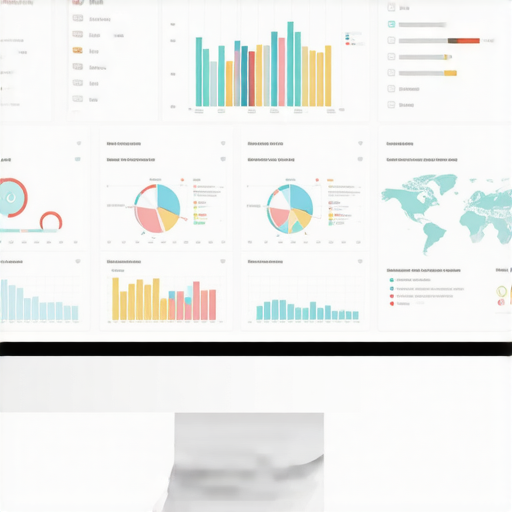
Translate raw data into digestible visuals for quick decision-making. For example, I crafted custom dashboards illustrating trends over time, allowing me to spot when rankings genuinely improved versus when data anomalies occurred. Avoid static reports; instead, automate KPI visualization with interactive charts that update in real time: map tracking tweaks. This approach helped clients grasp complex data at a glance and accept minor fluctuations as normal, focusing on meaningful gains.
Perform Direct Map Searches
Complement data analysis with manual searches to verify rankings in real-world conditions. During a 2025 project, I conducted targeted location searches from different devices and locations, confirming the accuracy of map pins and rankings. This method uncovered that some tools failed to account for local personalization and AI overlays. Incorporate this practice regularly to validate what your data reports. Also, consider geofencing your searches to simulate user conditions more precisely.
Document and Improve Consistently
Keep detailed records of ranking fluctuations and adjustments you make. Tracking these over time reveals patterns—like seasonal dips—and informs algorithm updates. For example, after correcting for data drift, my team documented a steady ranking increase over three months—validating the fixes applied. Use structured templates and visualization tools for consistent improvement: SEO ROI reporting. Staying diligent with verification practices will ensure your reports reflect genuine progress rather than errors or anomalies.Many practitioners believe that more data automatically equals better insights, but in reality, most get the nuances of Google Business Analytics and SEO reporting software wrong. A common myth is that KPIs are one-size-fits-all; however, metrics like map rankings and lead data require contextual interpretation to avoid costly misjudgments. For example, relying solely on aggregate data can mask local fluctuations caused by AI search overlays or proximity biases, which Google itself admits can distort rankings especially in hyper-local searches. This makes sophisticated KPI visualization—like custom dashboards that highlight meaningful changes—crucial for actionable insights. Now, an often-overlooked trap is that most SEOs fail to integrate real-world map rank tracking with organic search metrics; they assume a direct correlation without considering factors like Map Data Drift or personalized search results that skew data. According to industry expert Mari Smith, understanding that local rankings can be artificially inflated or deflated by transient map data issues helps avoid reacting to false signals. To elevate your analysis, focus on combining direct map searches with automated reporting adjustments—this dual approach prevents the ‘oops’ of misinterpreting temporary fluctuations as long-term trends. Have you ever fallen into this trap? Let me know in the comments. For advanced strategies, explore how to master SEO insights by visiting our resource on mastering SEO insights actionables for 2025, which guides you through making your metrics truly serve your clients’ growth needs.
Staying consistently effective with your SEO and analytics tools requires a strategic approach and the right equipment. I’ve found that investing in robust software solutions designed specifically for local SEO measurement is essential. For instance, I personally rely on Google Business Insights integrated seamlessly with premium KPI visualization tools. This combo allows me to monitor real-time rankings and engagement metrics, ensuring I catch anomalies early. To keep these tools performing optimally, regular updates and plugin checks are a must—think of this as fueling your engine to avoid breakdowns. As the SEO landscape shifts rapidly, choosing software that adapts through automations and API integrations is a game-changer. Predicting where this trend is heading, I anticipate that AI-powered analytics will become more mainstream, offering deeper, more precise insights with less manual effort. To truly leverage this, integrating AI-driven tools like advanced SEO reporting software can exponentially increase your efficiency and accuracy.
How do I keep my analytics and ranking tools sharp over time?
Effective maintenance starts with a scheduled audit—monthly check-ins that verify data accuracy, update software versions, and review your configurations. I recommend setting up automated alerts for significant ranking fluctuations, which can be done through tools like reporting automation shortcuts. Also, regularly cross-reference your data with manual searches and local listings to catch discrepancies early. Remember, as Google continues to refine its algorithms and introduce new AI overlays, your tools must keep pace. Prediction-wise, AI will increasingly help filter noise from meaningful data, but only if your systems are configured to learn and adapt.
For long-term results, document your adjustments and track their impact over time using visual KPI dashboards. This practice not only validates your strategies but also provides concrete proof to clients, boosting confidence and renewals. One advanced tip I highly recommend: leverage map rank tracking adjustments that utilize AI filters to eliminate false positives due to data drift, ensuring your rankings are always accurate even as local factors evolve.
In summary, maintaining your SEO tools isn’t a one-time effort but an ongoing process of updates, audits, and strategic adjustments. With the right software, routines, and a mindset geared toward continuous optimization, your agency can stay ahead of the curve well into 2026 and beyond. Want to take a deeper dive? Try implementing one of these advanced practices today and see how much more reliable your data can become. Need tailored advice? Reach out via our contact form.
What I Wish I Knew Before Relying on Data
One of my biggest lightbulb moments was realizing that not all map rankings are created equal. I once trusted a report that showed a client dropping from top spots, only to find out days later it was a data glitch caused by inaccurate map pin data. That experience taught me to always verify rankings with manual searches and cross-reference multiple sources, especially when the stakes are high.
Another lesson was understanding the transient nature of map data drift. I used to think fluctuations meant a sudden drop was permanent, but instead, I learned to spot and adjust for these anomalies using advanced filters and AI-enhanced tracking. Recognizing the difference between genuine rank changes and temporary glitches saves time and preserves credibility.
Moreover, I discovered that visual KPI dashboards aren’t just pretty charts; they are powerful tools for catching subtle shifts over time. Automated, real-time visualizations help me identify when rankings improve due to strategy versus when a data anomaly occurs, leading to smarter decisions and better client trust.
Lastly, integrating manual verification into my routine, like Geofenced searches from various devices, ensures I capture the real-world accuracy of map pins. This holistic approach combines technical tools and hands-on validation, creating a robust framework for local map domination in 2026 and beyond.
Tools and Resources That Made a Difference in My Campaigns
My go-to platform for accurate SEO reporting is specialized SEO reporting software that provides real-time insights and automations. It helps me quickly identify ranking anomalies and prevent reacting to false signals. KPI visualization tactics are essential for translating raw data into actionable insights, especially when managing multiple clients.
For manual verification, I rely on tools that allow geofenced local searches, which you can learn more about in maps rank tracking secrets. Combining these with authoritative local directories ensures my rankings reflect actual visibility rather than algorithm quirks.
Additionally, I keep an eye on strategic hacks for SEO software that help streamline audits and report custom insights, keeping my campaigns ahead of the competition.
Embrace Change: Your Next Step Is Now
The landscape of local SEO is constantly evolving, especially with AI overlays and map data fluctuations. But with the right mindset, proactive verification, and the right tools, you can turn these challenges into opportunities for growth and trust. Start implementing these lessons today, and watch your map rankings for 2026 become more reliable and impactful.
What has been your biggest challenge with map rank accuracy, and how are you planning to overcome it? Share your thoughts below—I’d love to hear your story and help you refine your approach.
,
Reading this makes me appreciate how nuanced local SEO really is, especially in tackling map data fluctuations. I’ve faced similar issues where rankings seemed to swing wildly without clear reason, and relying solely on automated reports only added to the confusion. I started incorporating manual checks and cross-referencing multiple sources like local directories and Google My Business updates, which really helped me get a more accurate picture. Interestingly, I’ve also found that for clients with multiple locations, consistent manual validation is crucial because data discrepancies tend to be more common across different regions. Has anyone found particularly effective ways to automate manual verification processes, especially for larger campaigns? I’d love to hear your strategies—sometimes I feel like I spend more time verifying than I do strategizing, but I know the accuracy pays off in the long run.