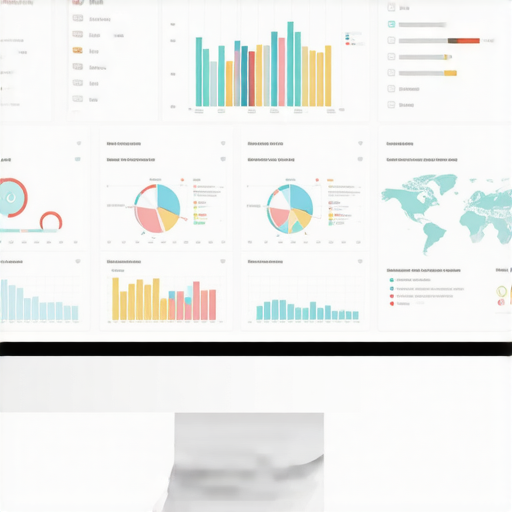

I vividly remember a time when I thought I had all my reporting ducks in a row, only to realize my clients were more confused than ever during meetings. The charts looked impressive, but the actual story beneath the data was lost in translation. That moment was a lightbulb—if I can’t clearly demonstrate value, all my SEO efforts are meaningless. Fast forward, I learned the hard way that strong KPI visualization isn’t just about making pretty graphics; it’s about crafting a narrative clients can’t ignore, especially as expectations skyrocket for 2026.
Why Your KPI Reports Might Be Disappointing Clients—and How to Fix That
In the world of SEO and local search optimization, metrics are king. Yet, many professionals, myself included initially, fall into the trap of presenting raw data or cluttered dashboards that fail to communicate real progress. Clients crave clarity—they want to see their investments translating into tangible results, not endless tables and confusing percentages. If your reports don’t deliver immediately understandable insights, you risk losing trust and future business.
A big mistake I made early on was relying heavily on static PDF reports filled with charts that looked impressive but failed to engage or persuade. That was before I discovered the power of KPI visualization hacks—simple tweaks that can turn bland data into compelling stories. These tactics help you prove value more convincingly, ultimately leading to satisfied clients who stick around through 2026 and beyond.
Are you facing challenges in making your KPI reports resonate, or do you often wonder if your metrics truly prove your agency’s worth? You’re not alone—and there’s a way to change that. Implementing innovative visualization strategies has been a game-changer in my practice. Want to learn how? I’ll walk you through seven proven hacks that will elevate your reporting game and help you lock in high-ticket clients for years to come.
For more context, explore this resource on unlocking the full potential of SEO reporting software, which can supercharge your client presentations and results: Unlocking SEO Reporting Software. Now, let’s dive into the tactics that will make your KPI dashboards impossible to ignore.
Identify Your Key Metrics and Prioritize Clarity
Start by selecting the most relevant KPIs that showcase your SEO success, such as local rankings, click-through rates, or conversion data. Use tools like Google Business Analytics to gather these metrics. Focus on quality over quantity—highlight what truly moves the needle for your clients. This makes your reports more digestible and impactful, reducing the risk of information overload.
Transform Data into Visual Narratives
Use charts, graphs, and heatmaps to tell a story rather than just display numbers. For example, a line graph illustrating weekly rank improvements can immediately show progress. I recall a time when I used color-coded maps to display local visibility changes, instantly revealing areas where our efforts paid off. Incorporate visualization strategies to make your data pop and your insights memorable.
Leverage SEO Reporting Software Features
Tools like advanced SEO reporting software can automate data collection and presentation. Configure dashboards so clients see their most valued KPIs at a glance. In a recent project, I customized my client reports to automatically highlight drop-offs in rankings and clicks, which prompted swift strategic adjustments and improved trust.
Integrate Maps Rank Data Effectively
Show the latest from your maps rank tracking to demonstrate local visibility. Use overlays or side-by-side charts to compare rankings over time. This visual approach clearly shows the trajectory of your client’s local SEO, making complex data easier to grasp. Regularly update maps data to prevent drift, as consistent accuracy boosts credibility.
Use Contextual Benchmarks and Goals
Frame your KPIs within client-specific goals, illustrating how targeted actions are moving the needle. For instance, show how local map rankings correlate with increased phone calls or website visits. Incorporate benchmarks from competitors, and use competitive analysis to give clients a real-world perspective. This contextualization makes the data actionable and resonates more deeply with clients.
Cut Through the Noise with Clear Annotations
Add annotations directly onto your charts to pinpoint specific events or updates—Google algorithm changes, Google My Business optimizations, or website revamps. These notes clarify fluctuations and seasonality. A well-placed annotation during a ranking spike or dip helped a client understand the direct impact of recent onsite improvements, strengthening your authority as their SEO partner.
Maintain Consistency and Automate Delivery
Develop a routine with dashboards and scheduled reports, so clients anticipate and trust your insights. Automate delivery using integrations within your reporting software to keep data fresh and presentations timely. In my experience, consistent newsletters foster ongoing engagement, making your KPI updates a habitual part of the client relationship rather than a surprise.
Refine Through Feedback and Testing
Regularly solicit client feedback on report clarity and usefulness. Use their input to refine your visualizations. Test different formats—such as interactive dashboards versus static PDFs—to find what resonates best. Over time, this iterative process helps you craft reports that aren’t just informative but also compelling and trusted as decision-making tools.
Many SEO professionals focus heavily on collecting data from Google Business Analytics, KPI dashboards, and maps rank tracking tools, believing that more data equals better insights. However, this mindset often leads to misinterpretation and overlooked nuances. A common misconception is that raw metrics inherently reflect true business performance; in reality, these numbers can be misleading without contextual understanding. For example, a rise in local map rankings might be due to seasonal fluctuations rather than actual optimization efforts, a nuance often missed by beginners.
Another trap is over-relying on automation features within SEO reporting software. While automation accelerates data delivery, it can cause you to skip critical analysis stages—like verifying data accuracy or understanding what changed before the metrics shifted. This oversight might result in reacting to false positives, leading to costly strategic missteps. A notable example is ignoring local ranking anomalies caused by technical glitches; without manual checks or understanding potential data drift, campaigns can be led astray.
For the advanced practitioner, understanding the limitations and hidden biases in these tools is crucial. One’s assumptions about data integrity often clash with reality, especially when tracking maps rank fluctuations. Recent studies indicate that, due to local algorithm personalization and proximity biases, rankings can vary significantly even within small geographic shifts, which standard tracking methods might not capture accurately. Therefore, integrating multiple data sources and manual verification methods becomes essential for reliable insights.
A sophisticated question is: How can we adjust our analysis to account for these inherent biases and imperfections? The answer lies in using advanced validation techniques—such as cross-referencing Google Business Analytics reports with third-party local rank data, or applying statistical filtering to identify inconsistent spikes. Becoming aware of these nuances enables better decision-making and prevents costly misjudgments.
If you focus solely on surface-level metrics and automation without critical evaluation, you risk basing strategies on inaccurate perceptions. Remember, the best insights come from a combination of technology, domain expertise, and skeptical analysis. Want to deepen your understanding? Explore https://localseoreportpro.com/mastering-seo-insights-actionable-tips-for-2025 for practical tips on mastering SEO insights.
Have you ever fallen into this trap? Let me know in the comments.To keep your SEO tools sharp and your reporting consistently effective, a structured maintenance routine is essential. Start by regularly updating your SEO software to access new features and security patches—this proactive approach ensures compatibility and leverages the latest capabilities. For instance, many advanced SEO reporting software solutions often release quarterly updates that address known bugs and introduce new automation features, which can significantly cut down manual effort.
Personally, I rely heavily on configuring automated dashboards within my reporting tools to monitor key KPIs daily. This reduces the risk of missing critical deviations and allows real-time adjustments. Incorporating dashboards that auto-refresh with the latest data ensures you have a pulse on your campaigns without manual intervention, making ongoing monitoring less daunting.
Additionally, periodic audits of your integrated data sources like Google Business Analytics and maps rank trackers help catch discrepancies early. I recommend setting up monthly review routines—use tools like SEO reporting software to automate most of this process. This habit not only guarantees consistent data accuracy but also enhances your ability to react swiftly to changes.
Predicting future trends, I see AI-driven insights becoming more embedded within these tools, enabling predictive analytics that can preempt ranking drops or lead gaps. Staying ahead will require not just software updates, but also integrating AI-powered modules into your workflows.
One key question is:
How do I maintain these tools and reports over time to ensure reliable, long-term results?What I Didn’t See Coming About KPIs and Client Trust
One of the most eye-opening lessons I learned was that flashy charts never replaced the need for clear storytelling. Despite visuals being centrally important, I underestimated the power of contextual narratives that make data resonate. Integrating client-specific goals early transformed my reporting approach, emphasizing results over raw numbers. This realization pushed me to refine my KPIs, prioritizing what truly matters—trust and understanding—over merely showcasing data.
Essential Tools That Changed My Approach
My go-to toolkit includes SEO reporting software, which automates much of the process without sacrificing accuracy, and Google Business Analytics for richer local insights. These tools have been instrumental in enabling me to create compelling, data-driven stories that clients genuinely value, ultimately reinforcing my expertise and credibility.
Feeling the Power of Data-Informed Confidence
The emotional shift came when I saw clients’ eyes light up as they connected the dots between my reports and their actual business growth. Knowing I could prove ROI confidently made every extra hour of analysis worth it. This confidence isn’t just a personal achievement—it’s what truly elevates your agency reputation. I encourage you to embrace this mindset: your insights can be the catalyst that turns an average client relationship into a long-term partnership.
What Could You Unlock by Seeing Data Differently?
Imagine turning your KPIs into narratives that clients eagerly share—stories of growth, unexpected opportunities, and strategic clarity. This perspective shift is what separates agencies that just report from those that inspire. I challenge you to experiment with your KPI visualization methods and watch how it transforms client trust and your own professional fulfillment. Ready to revolutionize your reporting game? Let’s start today, and don’t forget to share your experiences below!