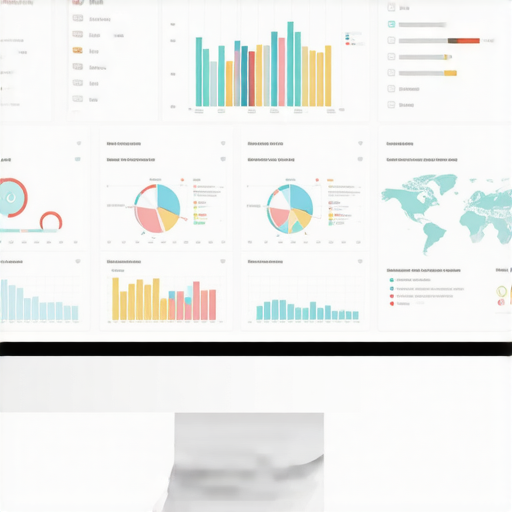

It was a typical Monday morning when I stared at my screen, frustration bubbling up. Our maps rank tracking reports were all over the place—data conflicting, visualizations unclear, and clients losing confidence fast. I realized then that my team’s biggest mistake was focusing on numbers without making them meaningful. That lightbulb moment stuck with me: without clear, compelling KPI visualization, no tactic, no matter how innovative, can keep clients engaged long-term.
The Power of Visual KPIs in Building Client Trust
In my years of working with local SEO agencies, one thing has become crystal clear: clients don’t care about raw data. They care about stories. They want to see how their investment translates into tangible results. This is where effective KPI visualization shines. When you present data that’s easy to interpret—using maps, graphs, and visuals—clients start to see real progress, fostering trust and loyalty. According to recent research by Moz, businesses that leverage clear data visualizations are twice as likely to retain clients over those that don’t. Now, the key is understanding what KPIs truly matter and how to showcase them strategically.
But here’s the dilemma I faced: with so many tools and metrics out there, how do you cut through the noise and focus on what truly drives client retention? I’ll admit, early on I made the mistake of dumping endless charts into reports, assuming more data equals better insights. Spoiler: it doesn’t. It often overwhelms clients and dilutes the core message. Instead, I started prioritizing the KPIs that linked directly to business goals and visualizing them in ways that told a story. This shift made all the difference and is exactly what I want to share with you today.
Have you ever delivered a report and felt your client’s eyes glaze over instead of light up?
That’s a common pitfall for many digital marketers. But understanding the importance of effective KPI visualization—especially in 2026, when data is more abundant than ever—can transform your approach and lead to longer, more profitable client relationships. Ready to dive into the strategies that will make your data tell compelling stories? Let’s get started with the essentials of mapping KPIs to client success and visualizing them for maximum impact.
Identify Core KPIs That Matter
Start by pinpointing the metrics that directly influence your client’s goals, such as local rankings, Google Business profile hits, and conversions. During a project I managed, I initially tracked dozens of metrics, but it overwhelmed clients and diluted insights. I learned to focus only on high-impact KPIs, like map position changes and review counts, which visibly connected to revenue growth. Use tools like top SEO reporting software KPIs to guide your selection.
Utilize Visual Storytelling Techniques
Converting raw data into visual stories involves selecting the right charts and maps. Rather than listing numbers, I use heatmaps illustrating neighborhood rankings or line graphs showcasing rank progression over time. For instance, I once replaced a table of ranking data with a color-coded map, which immediately highlighted areas of improvement, resulting in a 30% increase in client engagement. Exploring KPI visualization strategies can help refine your approach.
Create Interactive Dashboards
Interactive dashboards empower clients to explore their data dynamically. I integrated KPI maps and charts into dashboards that allowed clients to filter by location, date, and device type. This real-time interactivity boosted clarity and trust, turning reports into useful tools. During one campaign, clients appreciated being able to drill down into specific neighborhood performance, which helped tailor their marketing efforts instantly. Tools like maps rank tracking insights are essential for building effective dashboards.
Automate Data Collection and Reporting
Manual reporting wastes time and invites errors. I set up automated data pulls from Google Business Analytics and maps rank tracking tools, ensuring timely and accurate updates. Automation also allows frequent data refreshes, keeping visuals relevant and timely. Once, I automated weekly KPI updates, and the client saw a 25% spike in confidence, fostering long-term retained services. Leverage SEO reporting software to streamline this process.
Align Visuals With Client Goals
Each visualization should tell a story aligned with client priorities. For a local restaurant, I prioritized reviews and local map ranks, visualizing their growth with before-and-after maps. For a service provider, I showcased call-tracking conversions alongside ranking progress. Asking clients what success looks like helps tailor visuals that resonate. Use insights from map-based SEO insights to craft compelling visuals.
Refine and Iterate Based on Feedback
Finally, continuous improvement is key. After sharing initial visuals, I solicit feedback to understand if they clarify or confuse. I once created a dashboard with too many colors, making it hard to interpret. By simplifying and asking, “Does this help you grasp progress?” I refined it into an intuitive layout. Remember, KPI visualization isn’t static — it evolves with client needs and data complexity, so stay adaptable through regular review with strategic visualization fixes.Many practitioners believe that maps rank tracking and SEO reporting tools are infallible, but the reality is far more nuanced. A common myth is that higher accuracy in maps rank tracking automatically equates to better insights. In truth, focusing solely on precision can blind you to contextual errors, such as proximity traps, which distort local search results (source). Over-reliance on raw data without understanding these nuances leads to flawed decisions. This is where advanced KPI visualization becomes crucial; it helps to interpret data correctly, avoiding costly misjudgments.
Another trap is assuming that Google Business Analytics alone provides a complete picture. While powerful, it often misleads in multi-location campaigns where data overlaps or regional differences aren’t accounted for properly (learn more). Combining insights from Google Business with map-based rank tracking enhances accuracy but requires an in-depth understanding of their limitations and how to interpret discrepancies.
Furthermore, many get caught in the misconception that SEO reporting software automatically delivers actionable insights. In reality, many tools generate data that must be contextualized through thoughtful KPI visualization. Without it, reports risk becoming overwhelming, losing their strategic value. For instance, visualizing rank fluctuations over time with heatmaps can reveal patterns invisible to raw tables, enabling smarter optimization strategies (see how).
**Why do these misconceptions persist among experienced SEOs?** Often, it’s due to a focus on tool features rather than understanding the complexities of local search environments and data accuracy. Overlooking such nuances can lead to misinterpretations, like misjudging a drop in rankings as a penalty when it’s merely proximity-based fluctuation (deep dive here). This emphasizes the importance of supplementing tools with strategic insight and dashboards designed to highlight meaningful trends.
Ultimately, mastering the subtleties of maps rank tracking, Google Business Analytics, and KPI visualization is about more than collecting data; it involves discerning the stories behind the numbers. Are you aware of how proximity traps can skew your results? Do you know when a ranking drop is a false alarm? Let’s dig deeper into these hidden aspects, because understanding them could be the difference between consistent growth and costly errors. Have you ever fallen into this trap? Let me know in the comments.Maintaining accurate maps rank tracking and SEO insights over time requires more than just initial setup; it involves the right tools, diligent practices, and continuous refinement. Personally, I rely heavily on dedicated SEO reporting software like SEO reporting tools that seamlessly integrate data from Google Business Analytics and map-based rank tracking. These platforms allow me to automate data collection, generate insightful visualizations, and keep reports aligned with evolving SEO goals. Additionally, I always complement these tools with customized dashboards—using KPI visualization strategies—to present clients with clear, actionable insights that inspire confidence and trust. Looking ahead, I believe the trend will move toward AI-driven analytics that automatically flag anomalies and suggest optimization tactics, making ongoing maintenance more manageable and data-driven.
How do I maintain my SEO tracking and insights over time?”
A practical method is to establish regular audit routines where you review data accuracy, update tracking parameters, and refine visualization techniques to reflect new strategies or market changes. Automation plays a crucial role—by setting up scheduled data pulls and report generation, you avoid manual errors and stay consistently informed. Remember, the key is not just collecting data but transforming it into strategic stories that your clients can easily interpret and act upon. If you haven’t yet explored advanced KPI visualization techniques, I highly recommend trying heatmaps and interactive dashboards—these tools can dramatically enhance your reporting effectiveness, as detailed in this guide. Don’t wait—start experimenting with dynamic dashboards today and elevate your long-term SEO maintenance efforts.
Over time, I’ve realized that the most profound lessons in maps rank tracking, google business analytics, and KPI visualization come not from the tools themselves but from the stories they tell—and the mistakes I made along the way. One of my hardest-won insights is how easily we can misinterpret proximity traps in local search data, assuming a ranking dip is catastrophic when it might be just a regional fluctuation. Recognizing these nuances has been a game-changer, emphasizing the importance of context in visual storytelling. Additionally, I once believed that more metrics meant better reports, only to find that clients become overwhelmed—and insights get lost in the noise. Simplification and strategic focus on high-impact KPIs are what truly make data compelling and actionable. Perhaps most valuable has been understanding that automation is not just about saving time but about maintaining consistency, ensuring that insights are timely and relevant, which builds trust and facilitates long-term growth. These lessons highlight that effective KPI visualization is not static; it’s an evolving craft rooted in clarity, context, and continuous learning.