The Stealth Tactic to Outrank Competitors Who Dominate Your Local Map Pack
The Stealth Tactic to Outrank Competitors Who Dominate Your Local Map Pack
It is the ultimate frustration for any local business owner or digital marketer: you have optimized your Name, Address, and Phone number (NAP), you have collected dozens of five-star reviews, and you have uploaded high-quality photos. Yet, when you search for your primary service, your competitor – who hasn’t updated their profile in months – is still “parked” in the top three of the Map Pack. In 2026, the local search landscape has shifted. Standard google business profile seo is no longer a luxury; it is the bare minimum. If you want to displace long-standing incumbents, you have to look beyond the basics and address the “Proximity Trap” – the phenomenon where your rankings plummet just two blocks away from your physical office. To break through, you need a sophisticated approach known as Local Authority Stacking (LAS).
Why the “Standard” Google Business Profile Optimization is Failing in 2026
For years, the industry relied on a simple formula: relevance, distance, and prominence. If you checked those boxes, you ranked. However, Google’s 2026 algorithm updates have introduced a much more nuanced layer of evaluation: “Local Hub Signals.” The search engine is no longer just looking at whether you are a “plumber in Chicago”; it is looking at whether you are a recognized authority within specific neighborhood clusters.
Many business owners still follow advice found on generic forums or outdated blogs like BrandLume, which suggest that a responsive website and a few keywords are enough to rank higher on google maps. While those elements are necessary “table stakes,” they are not competitive advantages. In the current era, Google’s AI-driven local filter can detect when a business is “optimizing for the sake of optimizing” versus when a business is genuinely integrated into the local ecosystem. This is why you might see your rankings fluctuate wildly; it’s a symptom of a weak local signal. For a deeper dive into this phenomenon, read our guide on Why Your Map Ranks Shift Every Two Blocks and How to Verify the Data.
The failure of standard optimization often stems from a lack of “geographic depth.” If your digital footprint is identical to a competitor’s, Google defaults to the oldest, most established profile. To win, you must create a signal so geographically dense that the algorithm has no choice but to prioritize your entity over the legacy players.
The Stealth Tactic Revealed: Local Authority Stacking (LAS)
Local Authority Stacking (LAS) is the strategic layering of geo-specific signals to create an unbreakable “entity” in Google’s eyes. Instead of viewing your google business profile seo as a single task, LAS treats it as the foundation of a multi-tiered authority pyramid. According to expert Arslan Abid, a Local SEO Specialist, LAS is what separates the businesses that “exist” on the map from those that “dominate” the map.
Hyper-local Content: Beyond the City Name
In 2026, targeting a city is too broad. LAS requires you to go down to the neighborhood, block, and landmark level. If you are a law firm in Miami, you shouldn’t just talk about Miami. Your website and profile should reference “Brickell,” “Coral Gables,” and “Wynwood.” By creating pages and posts that mention specific local landmarks, transit stops, and community centers, you signal to Google that your relevance is not just city-wide, but hyper-local. This helps expand your “ranking radius,” allowing you to show up in the Map Pack even when the searcher is miles away from your front door.
Niche Citations: The “7 Specific Citations” Strategy
General citations like Yelp or YellowPages are still useful, but they carry less weight than they used to. LAS utilizes niche-specific citations that are unique to your industry. For service providers like pest control or roofers, there are often 7 to 10 industry-specific directories that Google trusts implicitly. When you stack these niche citations on top of hyper-local content, you create a “relevance loop” that is very difficult for competitors to replicate without significant effort. To manage these complex signals, many top-tier agencies utilize professional google business profile seo tools to ensure consistency and authority across the web.
4 Hidden Map Pack Ranking Factors Most SEOs Ignore
Research from “Mappackgrowthsystems” has identified several “stealth” factors that are currently driving the biggest ranking shifts in 2026. If you are struggling to move the needle, you are likely ignoring one of these four pillars.
1. Entity Association and Landmarks
Google’s Knowledge Graph now connects businesses to nearby physical landmarks. If your business is frequently mentioned in the same context as a major stadium, park, or historic building, Google begins to associate your “Entity” with that geographic coordinate. This association acts as a ranking booster. You can influence this by mentioning your proximity to these landmarks in your profile description and on your “Contact Us” page.
2. User Behavioral Signals (The CTR Factor)
The Map Pack is not just about what you tell Google; it’s about how users interact with you. High Click-Through Rates (CTR) from the map view – specifically “Request Directions” and “Click to Call” – are massive ranking signals. If users consistently choose your listing over the one in the #1 spot, Google will eventually swap your positions. This is why your “Cover Photo” and “Review Snippets” are more than just aesthetic choices; they are psychological triggers to drive the CTR that fuels your rankings. Learn more about stealing these clicks in our article on 5 Tactics to Steal Competitor Map Shares in 2026 [Tested].
3. Local Link Velocity
Backlinks have always mattered, but “Local Link Velocity” is the 2026 metric of choice. A link from a local neighborhood blog, a high school sports team, or a local charity is worth ten links from a generic “DA 50” guest post site. Google looks for a steady stream of these local mentions to verify that your business is an active participant in the community. This “velocity” signals that your business is trending, which can lead to a rapid ascent in the Map Pack.
4. Geo-Tagged Media and AI Interpretation
While Google officially states that they strip EXIF metadata from images, their Vision AI is now sophisticated enough to “read” the content of your photos. If you upload a photo of your team working in front of a recognizable local landmark, Google’s AI identifies that location and applies it to your profile’s geographic authority. This is why using original, high-resolution photos of your actual work in the field is vastly superior to using stock photography. Using local seo tools to analyze how your media is being indexed can provide a significant edge.
How to Use Local SEO Tools to Audit Your “Red Grids”
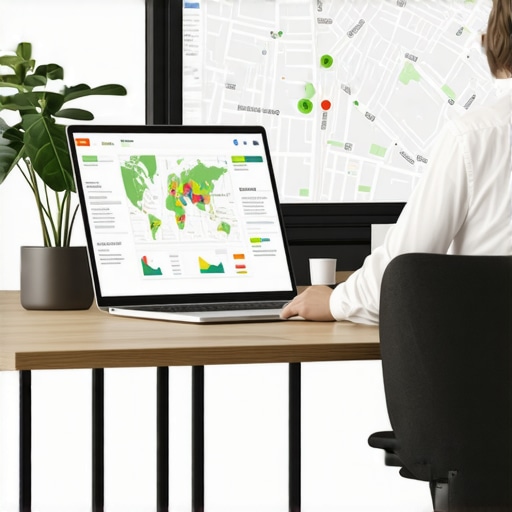
One of the biggest mistakes business owners make is checking their rankings from their own office. Because of proximity, you will almost always see yourself in the #1 spot. However, if you move three blocks away, you might disappear entirely. This is why modern SEOs use grid-based tracking. If your grid is full of “red” dots (indicating rankings outside the top 3), you need to understand the “why” behind the failure.
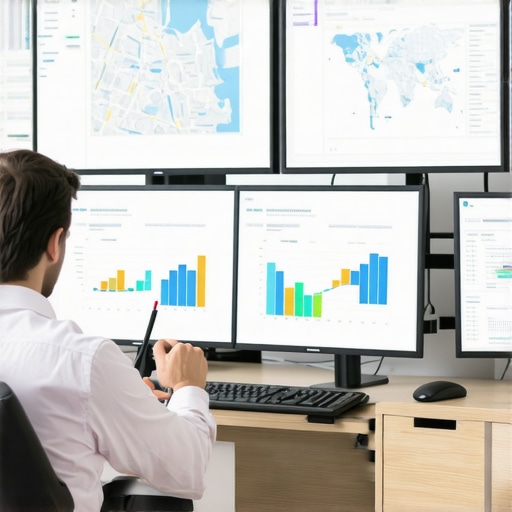
By using a professional google maps rank tracker, you can visualize exactly where your authority drops off. Is it a hard line at a specific highway? Does it drop off in a specific neighborhood? This data allows you to apply Local Authority Stacking specifically to the areas where you are weak. If you see “Ghosting” – where your rank disappears and reappears randomly – you may be dealing with a filtering issue. Check out our technical guide on Map Grid Ghosting: 4 Fixes for Accurate 2026 Rank Tracking to resolve these discrepancies.
Auditing your grid is the first step in moving from a defensive SEO posture to an offensive one. When you have the right local seo software, you can see exactly which competitors are encroaching on your territory and deploy LAS tactics to push them back. For those managing multiple locations, this level of visibility is the only way to maintain a consistent lead generation engine. For more advanced analysis, see our report on 3 Map-Based SEO Analysis Moves to Beat Aggregators in 2026.
Vertical-Specific Strategies: From Lawyers to Landscapers
While LAS is a universal framework, the implementation varies depending on your business model. Here is how different niches should apply these stealth tactics in 2026:
Contractors and Service Area Businesses (SABs)
Contractors often struggle because they don’t have a physical storefront in every city they serve. The “Stealth Tactic” here is to leverage Service Area settings alongside “Location Pages” that feature actual project photos from those specific zip codes. By proving to Google that you are physically present in those areas through geo-relevant media, you can often outrank businesses that have a physical office but no local activity signals.
Medical Practices and Med Spas
Medical niches are highly sensitive to proximity. Even with a massive ad spend, many clinics fail to rank outside a 2-mile radius. The fix is “Provider-Based Stacking.” Instead of just optimizing the practice profile, you must optimize the individual profiles of the doctors. When Google sees multiple authoritative entities (the doctors) tied to a single location (the practice), the overall authority of the “Hub” increases, expanding the ranking radius significantly.
Legal Professionals
The legal niche is the most competitive in local search. To win here, you must focus on “Legal Directory Authority Stacking.” This involves securing placements in high-authority legal directories and then linking those profiles back to specific “Practice Area” pages on your site that use hyper-local terminology. This creates a “Trust Silo” that Google’s algorithm finds highly credible for high-stakes searches like “personal injury lawyer near me.”
For any niche, the key is to stop viewing your profile as a static listing and start viewing it as a dynamic entity. If you are struggling to maintain visibility, it might be time to look into How to Fix 2026 Map Visibility After a Local Proximity Update.
Conclusion: Dominating the Local Search Landscape
Outranking dominant competitors in the Google Map Pack is no longer about who has the most reviews or the oldest listing. In 2026, it is about who has the most “Geographic Authority.” By implementing Local Authority Stacking – layering hyper-local content, niche citations, and user behavioral signals – you can break through the proximity trap and claim the top spots in your market.
As Arslan Abid often emphasizes, the map is a reflection of real-world authority. If you want to rank like a leader, you must build your digital presence with the same level of care and local integration as your physical business. Start by auditing your current performance with professional google business profile seo tools, identify your “red zones,” and begin stacking your authority. The competitors who are “parked” at the top are vulnerable – they just don’t know it yet. With the right strategy and the right local seo software, you can turn the map in your favor and secure a consistent stream of local leads for years to come.