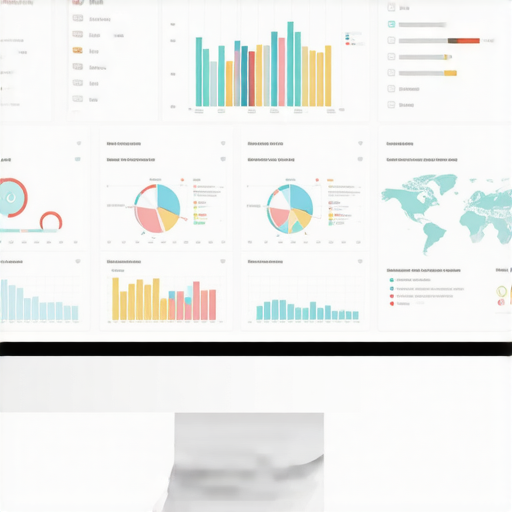

I remember the moment when I realized my SEO reports were doing more harm than good. I had just wrapped up a long client presentation, full of colorful charts and detailed metrics, only to see them glaze over once I mentioned a key KPI. The truth? Those PDFs I kept sending were turning into background noise—ignored after the first glance. It hit me hard: I was failing to communicate the real value of my work. Have you ever experienced a similar frustration, where your reports seem to get lost in the shuffle or, worse, misinterpreted? That’s a sign your KPI visualization approach needs a serious upgrade.
Transforming Your KPI Reports Into Clear, Actionable Insights
In the fast-evolving landscape of 2026, the way we present data can make or break our client relationships. Gone are the days of static PDFs filled with static numbers. Instead, dynamic and engaging KPI visualizations can dramatically improve comprehension and decision-making. Based on my journey, I’ve uncovered five essential fixes that will elevate your KPI reports and ensure they drive real results. Ready to ditch boring spreadsheets and start creating reports that clients will actually read and act upon? Let’s dive into what makes a KPI visualization truly effective.
Is All This KPI Talk Actually Worth the Hype?
Early in my career, I made the mistake of focusing solely on the numbers, assuming more data meant better insights. I didn’t realize that poorly designed visuals could actually obscure those insights. A colleague once warned me, “Data visualization isn’t just about making charts look pretty; it’s about making complex data understandable.” That lesson stuck. If you’ve ever sent out a report and received that dreaded silence or vague praise, you’re not alone. The key lies in how we present our KPIs, especially in a competitive market where clarity can set you apart. For more on how to master KPI visualization, check out this comprehensive guide.
Now, with these insights in mind, we can explore the concrete fixes that will make your KPI reports in 2026 more persuasive, informative, and ultimately, more profitable. Stay tuned—you’ll never want to send another boring PDF again.
.
Start with Precise Data Collection
The first step is ensuring your data sources are accurate and comprehensive. Use tools like Google Business Analytics to gather detailed insights on local search and customer interactions. I once tried to create a report tracking local leads without verifying the data integrity, resulting in misleading insights. After fixing data collection points—adding proper event tracking and filters—I gained clearer visibility into true lead sources.
Segment Data Effectively for Clarity
Don’t dump all metrics into one chart and hope for clarity. Break down data into meaningful segments, such as geographic areas, device types, or conversion stages. For example, I used to present aggregated rankings, but segmenting by location revealed specific neighborhoods where my client could dominate search results. This segmentation made the report actionable and prioritized SEO efforts.
Use Visual Hierarchy to Highlight Key Metrics
Design your dashboards with visual hierarchy—bold colors for KPIs that need immediate attention, subtle shades for background data. Think of it as a traffic system where crucial signals stand out, guiding decision-making swiftly. I applied this principle when creating a MAPS RANK tracking dashboard, emphasizing rankings with red and green colors. The immediate visual cue helped my team focus on ranking drops or gains without parsing dense data.
Maximize Visual Tools for Engagement
Leverage advanced visualization techniques like heat maps, trend lines, or animated graphs. Static charts are dull; dynamic visuals drive engagement and comprehension. When I integrated animated ranking fluctuations over months, stakeholders grasped seasonality effects instantly. Check out these visualization strategies to enhance your reports.
Simplify for Actionability and Impact
Complex data lose impact unless distilled down to clear insights. Use annotations to explain spikes or drops, and focus on actionable takeaways rather than raw numbers. For instance, a spike in map impressions coincided with a local event I highlighted, prompting the client to capitalize on similar opportunities in the future. Always ask: “What should the client do next?”
Automate & Streamline Your Reporting Process
Manual reporting is time-consuming and error-prone. Automate data pulls and report generation using specialized SEO reporting software. I once spent hours assembling a weekly report; automation cut that to minutes, freeing me to interpret data rather than compile it. Invest in tools that allow customization and scheduled delivery, ensuring reports are timely and consistent.
Iterate Based on Feedback and Results
Finally, treat your KPI reports as living documents. Gather feedback from clients and your team—what’s clear, what’s not? Use analytics to see which visualizations drive engagement. I refined my dashboards over several iterations, replacing confusing charts with straightforward gauges favored by stakeholders, leading to better decisions and stronger client trust.
Many practitioners believe that mastering tools like Google Business Analytics or Maps rank tracking is simply about collecting the right data. However, a common misconception is that all data is equally valuable or that these platforms provide foolproof insights. In my experience, most errors stem from overlooking the nuanced quirks and limitations embedded within these tools. For example, it’s widely assumed that Google Business Analytics reports are inherently accurate, but research shows they can be contaminated by data leaks and proximity biases, leading to misleading conclusions. To truly leverage these platforms, you must understand their blind spots and how to interpret data contextually. Advanced users question whether traditional KPI visualization methods capture the full picture or if more sophisticated techniques, like multi-layered dashboards or real-time overlays, are necessary to get an edge. One trap I’ve seen many fall into is chasing surface metrics—like simple ranking positions or raw click counts—without considering underlying factors like local competition shifts or algorithm updates, which can distort the narrative. For instance, relying solely on impressions can be deceptive if search intent or device variability isn’t factored in, as highlighted by SEO authorities like Search Engine Journal. To avoid these pitfalls, I recommend we dig deeper into data validation, cross-referencing metrics across platforms, and understanding platform-specific quirks. This nuanced approach is critical because superficial interpretations can lead to costly strategic errors, especially in competitive local SEO campaigns. Want to refine your analytics mindset? Check out this guide on avoiding common pitfalls in Maps rank tracking, or explore how to uncover hidden issues with Google Business Analytics. Remember, mastering these nuances can be the difference between a good campaign and a great one. Have you ever fallen into this trap? Let me know in the comments.
Maintaining the performance of your SEO tools, especially when dealing with Google Business Analytics, Maps rank tracking, and KPI visualization, requires a strategic approach. I personally rely on a set of robust software solutions and disciplined routines to ensure these tools continue delivering accurate insights. For instance, I use SEO reporting software that offers automation, customizable dashboards, and regular updates—saving me hours of manual work and reducing errors.
One key routine I follow is routine data validation. Platforms like Google Business Analytics can sometimes present data anomalies, so I cross-reference metrics with alternative sources like Google Search Console or local keyword rankings. This multi-source approach helps me spot discrepancies early, allowing corrections before reports go out. This practice aligns with expert recommendations from Moz, who emphasize regular data audits to maintain accuracy.
Another strategy is leveraging automation tools. Setting up scheduled data pulls and automated report generation ensures your insights are up-to-date without the manual hassle. I’ve found that automations not only improve consistency but also free up time for analysis and strategic planning. To stay ahead, continually explore and adopt innovative features—most SEO tools release updates frequently, and staying current guarantees your insights remain relevant and precise.
Looking towards the future, I predict that AI-driven analytics will become even more integral. Tools will increasingly interpret trends autonomously, flag anomalies, and suggest actions. To prepare, you might consider integrating AI features or exploring platforms that leverage machine learning for predictive insights. Early adoption of these innovations can set your agency apart and provide clients with forward-thinking strategies.
How do I maintain my tools and insights over time?
The answer lies in routine checks, ongoing training, and staying informed about tool updates. Regularly review your data collection processes, update your software to access new features, and invest time in training yourself and your team. For example, I dedicate a weekly session to review Google Maps rank tracking accuracy, ensuring that pin placements and ranking data stay precise. Such proactive maintenance ensures your analytics remain reliable and actionable.
Implementing these practices has profoundly improved the long-term stability of my SEO efforts. Remember, the key is not just choosing great tools but actively managing and updating them. If you’re unsure where to start, consider reaching out through our contact page. Don’t forget: Try setting up automated data validation routines today—it’s a game-changer for ongoing accuracy and peace of mind.

Insights from the Trenches: Hard Lessons That Shaped My Approach
One of the toughest realizations I had was that even the most sophisticated Google Business Analytics setup won’t save you if your data collection isn’t spot-on. I learned this the hard way when misconfigured event tracking led me astray, causing me to chase false leads and miss real opportunities. This taught me to prioritize rigorous data validation before diving into analysis.
Another eye-opener was realizing that no single visualization method can serve all KPIs. I used to rely solely on line charts for everything, but found that heat maps and animated graphs often communicated the story more effectively. Embracing diverse visualization tactics turned my reports into more compelling narratives.
Finally, I understood that automation isn’t just a time-saver but a strategic advantage. Manual reporting created errors and delays, losing client trust. Automating data pulls and report generation with reliable tools transformed my workflow, allowing more focus on insights rather than assembly.
My Arsenal: Tools That Keep Me Ahead
For precise local SEO insights, I swear by maximizing Google Business Analytics. It reveals hidden local trends and leads. Maps rank tracking secrets are essential for staying ahead of local competitors—and KPI visualization strategies help translate complex data into actionable insights. For comprehensive reporting automation, I rely on top SEO reporting software. These tools keep me efficient, accurate, and client-focused.
Push Your Boundaries and Lead the Charge
The landscape of local SEO analytics is evolving rapidly. To stay relevant and effective, embrace continuous learning, experiment with new visualization methods, and leverage automation. Don’t settle for outdated data practices—your clients deserve cutting-edge insights. Are you ready to revolutionize your SEO reports in 2026? Share your biggest challenge below, and let’s tackle it together.