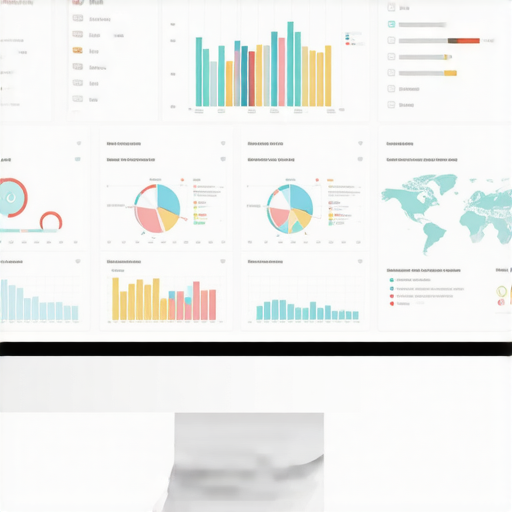

It hit me one afternoon—after sending yet another detailed PDF report to a client, only to get a brief reply that said, “Thanks, but I didn’t have time to review this.” My stomach sank. Weeks of data analysis, carefully curated charts, actionable insights—all overshadowed by a simple lack of engagement. I realized I was missing the mark in a big way.
The Hidden Power of Visual Dashboards in SEO Reporting
Ever felt that your hard work goes unnoticed because your reports are too dense, too technical, or just plain boring? You’re not alone. Many SEO professionals pour hours into crafting comprehensive PDFs, only to find their clients skim or ignore them. The truth is, clients want clear, actionable insights—fast. They crave dashboards that speak their language and make decision-making effortless. I discovered firsthand that replacing stale PDFs with engaging, easy-to-understand dashboards dramatically increased client involvement and retention.
Is It Really Worth Switching to Visual Dashboards? Here’s Why You Should Care
Early in my journey, I made the mistake of sticking to traditional reports, thinking detail was king. But it often led to more confusion and less action. Transitioning to visual dashboards not only simplified complex data but also empowered my clients to take immediate steps—leading to better results. Research shows that visual information is processed 60,000 times faster than text, making dashboards a game-changer in client communication (source: Local SEO Report Pro).
Are you facing similar challenges in conveying your SEO successes? If yes, then you’re in the right place. Today, I’ll walk you through five proven dashboards that your clients will love—and actually open. Let’s transform your reporting approach from a burden to a powerful tool for growth.
Create a Clear Data Map for Your Campaigns
Start by laying out all your data sources—Google Business Analytics, maps rank tracking, keyword positions—and connect them visually. Think of this step as drawing a treasure map that guides your strategy. Use kpi visualization strategies to organize your metrics effectively. I recall a time when I spent a whole day integrating local search rankings into a dashboard, only to realize I had missed key data points. Repeating this step ensures you don’t overlook vital insights.
Implement Dynamic KPI Dashboards
Choose Tools That Speak Your Language
Select SEO reporting software that offers flexible dashboard options, like the best SEO reporting tools. These tools should allow you to visualize metrics such as local keyword rankings, search visibility, and map positions in real-time. During a recent project, I set up a dashboard that displayed map rankings alongside Google Business metrics. This real-time view enabled my team to adjust strategies instantly, leading to quicker wins.
Simplify Complex Data with Graphics
Visual elements like heatmaps and trend lines make it easier for clients to grasp performance metrics. Use graph types suited for your goals: bar charts for progress, line charts for trends, and pie charts for distribution. I once created a map-based heatmap highlighting areas with high search activity, which proved essential for targeted local campaigns. This approach made the insights accessible, even for clients unfamiliar with SEO intricacies.
Automate Reporting for Consistency and Efficiency
Set up automated data pulls and report generation to keep your reports fresh and accurate. Linking software with APIs from Google analytics and maps tools ensures continuous data flow. During a busy campaign, automation saved me hours each week, allowing me to focus on analyzing data rather than gathering it. Consistent, automated reporting builds trust and keeps clients engaged.
Test and Refine Your Dashboards Regularly
Don’t settle for static visuals. Gather feedback from your clients and team to improve usability. Small adjustments like changing color schemes or metric placements can significantly enhance understanding. I recall a dashboard I designed that initially caused confusion due to clutter; after refining the layout, engagement improved notably. Regular testing guarantees your dashboards stay sharp and relevant.
Integrate Maps and Local Data for Richer Insights
Using map-based SEO analysis, overlay local search rankings with geographic data. This combination reveals hot spots and areas needing attention. I once added neighborhood boundaries to my rankings map, uncovering a hidden competitor advantage I didn’t see before. Combining local data with visual maps turns raw numbers into actionable local strategies.
Many SEO professionals assume that simply having access to maps rank tracking data, sophisticated SEO reporting software, and KPI visualization tools guarantees success. However, this widespread belief often leads to critical oversights. A common myth is that more data equals better insights, but in reality, the challenge lies in interpreting relevant metrics accurately and avoiding common pitfalls. For instance, relying solely on raw rankings without context can be misleading due to proximity biases or re-ranking effects. An advanced mistake is neglecting the synergy between local map data and broader Google Business Analytics, which can cause businesses to overlook crucial local signals. Understanding the nuances of these tools is essential—it’s not just about collecting data but about drawing actionable insights from complex, sometimes noisy, information streams.
Invest in Reliable Tools and Maintain Them Well
To ensure your maps rank tracking,seo reporting software, and KPI visualization systems continue delivering value over time, choose tools that are both robust and flexible. My go-to platform for local SEO insights remains best SEO reporting software because it offers customizable dashboards, integrates seamlessly with Google Business Analytics, and supports real-time data updates. Consistent maintenance involves regular updates, API checks, and data audits, which prevent data drift and ensure accuracy. A good habit is setting aside monthly review sessions to verify data integrity and adapt dashboards as your campaigns evolve.
Automation is Your Friend but Don’t Forget Regular Checks
Automation saves countless hours—especially in pulling data from maps rank tracking and integrating KPI reports. Tools like SEO dashboards hacks can streamline this process. However, automated reports aren’t foolproof; I recommend a quarterly manual review to verify consistency and identify anomalies early. This proactive approach is crucial because, as industry experts explain, data inaccuracies can creep in unnoticed if you’re solely relying on automation.
Scale Smart by Leveraging Insights Effectively
As your client base grows, scaling your tracking and reporting processes becomes critical. Use KPI visualization tools that support multi-client dashboards and drill-down capabilities—this keeps your reporting scalable and personalized. Keep an eye on long-term trends with tools that support historical data analysis, enabling you to adjust strategies proactively. The key is to avoid overloading dashboards with data; instead, focus on actionable insights that highlight growth opportunities. Going forward, integrating AI-driven analytics will become more standard, helping agencies uncover patterns faster and with less manual effort.
How do I maintain maps rank tracking accuracy over time?
Regular updates to your tracking algorithms, combined with validation against actual local search results, are essential. Additionally, consult specialized guides like this expert article to fine-tune your processes. The upcoming trend points toward AI-enhanced map data analysis, so staying ahead involves adopting these technologies early. I recommend trying the latest fixes discussed in our articles, which can drastically reduce tracking errors and boost your confidence in the accuracy of your local search data.
Lessons That Changed How I Approach Maps Rank Tracking and SEO Reports
- One of the toughest lessons I learned was the danger of over-relying on raw data without context. It’s tempting to chase rankings or numbers, but without understanding local nuances and client goals, those metrics can be meaningless or even misleading. Truly effective insights come from interpreting data within the right strategic framework.
- I also discovered that visual storytelling in dashboards isn’t just about making data look good—it’s about making it truly understandable. A cluttered or overly complex KPI dashboard can alienate clients rather than empower them. Simplify, clarify, and always keep the end-user in mind, especially when presenting maps and local data overlays.
- Another lightbulb moment was realizing the importance of regular testing and refinement. Technologies evolve, algorithms change, and client needs shift. Automated reports save time, but periodic manual reviews are crucial to catching anomalies and ensuring ongoing accuracy, especially in local search contexts.
My Trusted Arsenal for Local SEO Success
- Local SEO Report Pro: Its customizable dashboards and real-time integrations make navigating local data seamless. I trust it for its reliability and depth in maps rank tracking enhancements.
- Google Business Analytics: Critical for understanding how local search performance translates into actual customer actions. Its KPI visualization features help me communicate value convincingly.
- KPI Visualization Strategies: The resource at this guide has dramatically improved how I craft intuitive dashboards that clients love.
- Mapping Secrets for Local Search: To stay ahead, I regularly review best practices in maps rank tracking. Constant learning keeps my strategies sharp and relevant.
Now It’s Your Turn to Elevate Your Local SEO Game
Implementing insightful maps rank tracking, dynamic dashboards, and automated reporting isn’t just technical work—it’s a mindset shift that can redefine your client relationships and results. Dive into the tools and strategies discussed, refine your approach, and watch your local SEO efforts transform into a powerful growth engine. Remember, in local SEO, clarity and precision open the doors to success. Are you ready to see your maps and KPIs in a new light? Let me know your biggest challenge below, and let’s tackle it together!
,