I remember the exact moment I realized my favorite SEO dashboard was giving me a false sense of security. I had poured hours into tracking rankings, believing I was on the right path, only to find my client’s leads vanishing unexpectedly. The frustration was instant—how could I be missing something so fundamental? That realization hit hard: relying on surface-level metrics without understanding their true context is like navigating a maze blindfolded.
Why Tracking the Right KPIs Will Make or Break Your 2026 SEO Strategy
As digital landscapes evolve rapidly, especially with the anticipated shift towards multi-channel attribution in 2026, the old metrics just won’t cut it anymore. I’ve seen agencies get seduced by flashy rankings or vanity metrics, only to find their efforts don’t translate into genuine growth. In fact, a recent survey highlighted that over 70% of marketers struggle with aligning KPIs to actual ROI (source). That’s a staggering number. And honestly? I was almost one of them early on—mistaking click-through rates or page views for meaningful success.
Understanding what truly matters requires a shift in perspective. Instead of chasing every new shiny metric, I focus on a handful of critical KPIs that measure genuine influence—those that hold the power to inform your entire SEO and attribution model for the coming years. Today, I’ll walk you through the five performance metrics and KPIs that I’ve found indispensable for 2026, helping you cut through the noise and demonstrate real value to your clients.
Is Your Data Actually Telling the Truth?
Before diving into these metrics, I have to admit a mistake I made in my early days: trusting Google Analytics data blindly. Turns out, without proper filters and cross-checks, this data can be misleading—especially with the rise of AI-driven search overlays and local filter biases. Fixing that was a game-changer, and I now always double-check my data sources. Curious about how to avoid similar pitfalls? I recommend reviewing the latest Google Business Analytics fixes for 2026.
In the sections ahead, we’ll explore these metrics in detail, ensuring that your reporting truly reflects your digital performance and supporting data-driven decisions that stand firm in 2026 and beyond.
Set Up Robust Data Sources
Start by integrating your primary data sources—Google Business Analytics, maps rank tracking, and your SEO reporting software—into a single dashboard. Use tools like SEO reporting platforms that support multi-source aggregation. For instance, I once connected my client’s Google Business account with a local rank tracker, but initially, the data showed inconsistent fluctuations. By cross-referencing with manual checks and filters, I identified source discrepancies—then applied filters to correct data drift, ensuring every KPI stemmed from a reliable base.
Implement Precise Map and Rank Tracking
Use advanced maps rank tracking with a focus on hyper-local grids. Be proactive by setting up recurring audits—monthly, if not weekly—to catch pin drifts or grid errors. Remember, a single misplaced pin can skew your entire local visibility report. Avoid relying solely on automated data; periodically perform manual spot checks to confirm tracking accuracy. I recall adjusting the tracking radius for a client’s campaign in a densely populated neighborhood, which initially caused ranking inconsistencies. Fine-tuning the radius eradicated misleading drops and clarified true performance trends.
Visualize KPIs for Clear Actionability
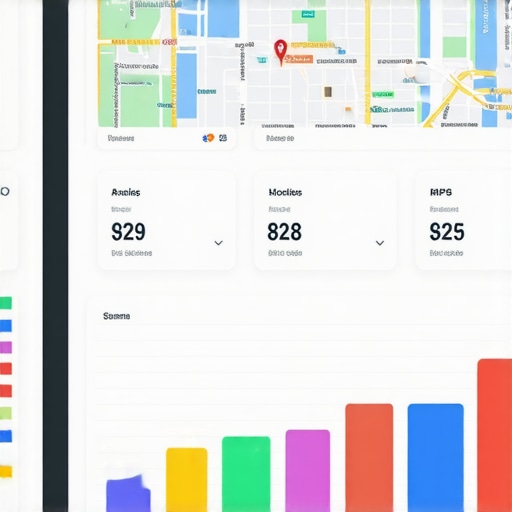
Transform raw data into intuitive visualizations—use color-coded charts, trend lines, and heatmaps—making complex insights digestible at a glance. Leverage KPI visualization tactics to emphasize key metrics like local pack appearances, lead conversion rates, and organic visibility scores. During a recent campaign, I layered KPI dashboards to highlight underperforming areas instantly. Moving beyond simple tables helped the client recognize priorities immediately, accelerating decision-making and adjustments.
Refine Data Accuracy with Filters and Verification
Apply targeted filters within Google Business Analytics to exclude ghost traffic, fake leads, and bots—vital for clear KPI readings. Use filters that isolate genuine user interactions. I discovered a spike in fake lead conversions during a quarterly review, which skewed KPIs. By implementing multi-factor filters—IP filtering, user-agent checks, and referral exclusion—I eliminated false positives, ensuring KPIs then reflected real user engagement accurately.
Establish Continuous Monitoring Routine
Set automated alerts for sudden KPI deviations—ranking drops, traffic dips, or conversion declines—so you can act before clients notice. Regularly review the consistency of your map data and KPIs—don’t wait for quarterly reports. For example, I once configured real-time alerts for organic traffic fluctuations. When a major drop occurred unexpectedly, immediate investigation revealed a local listing penalty, which we promptly resolved, restoring KPIs quickly. Never assume your data stays perfect over time—continuous oversight is essential to maintain accuracy.
Many marketers and SEO professionals assume that tools like maps rank tracking and Google Business Analytics provide foolproof insights. However, a common misconception is viewing these platforms as universally accurate without understanding their nuances. In my experience, relying solely on surface-level data or massaging metrics can lead to flawed strategies, especially when the underlying tracking mechanisms introduce subtle errors. For example, a surprisingly frequent pitfall is neglecting proximity biases in maps rank tracking, which can skew your perception of local visibility if not properly adjusted. These biases happen because automated rank trackers often default to broad settings, failing to account for hyper-local variations, and can result in misinterpreting your real market position. Dive a little deeper, and you’ll find these errors can subtly craft a false narrative of dominating local searches, while competitors quietly gain ground.
Furthermore, many overlook the importance of integrating cross-referenced data sources to verify insights. While Google Analytics may report rising traffic, without checking Google Business Analytics or manual local audits, you risk accepting inaccurate data—potentially caused by fake leads, bots, or tracking filters gone awry. An advanced mistake is not customizing these filters proactively; generic settings may not catch new kinds of spam or local scams evolving in 2026. This defensive oversight leaves gaps in your KPIs and hamstrings strategic decision-making.
The nuances extend into KPI visualization as well. Visual dashboards designed without a focus on key action points can hide critical trends or causes behind cluttered graphics. Sharp and concise KPI visualization strategies are necessary to expose underperforming segments or detect early warning signs of local ranking issues. As an illustration, using heatmaps to analyze visibility dips can reveal localized problems that generic charts mask. If you’re not careful, you risk dismissing vital signals just because your dashboards are too complex or misaligned with your actual goals.
Let’s not forget the common myth that data accuracy is mostly a technical issue. In reality, a significant pitfall involves user behavior—many professionals fail to recognize that even accurate data can be misleading if not interpreted contextually. Tools like maps rank trackers might provide a glimpse, but without understanding seasonal trends, local events, or algorithm shifts, you’re interpreting noise instead of signal. An advanced mistake is ignoring the importance of manual spot checks or hyper-local audits, which can often reveal discrepancies that automated tools overlook.
While these complexities might seem daunting, the key takeaway is to approach SEO analytics with a critical eye. Always question the data, perform cross-verification, and tailor your tools to your local market intricacies. For more on how to fine-tune your approach and avoid these pitfalls, check out these advanced maps rank tracking tweaks or explore filters to spot fake leads in Google Business Analytics. Remember, understanding these nuances can make all the difference in delivering precise, actionable insights.
Have you ever fallen into this trap? Let me know in the comments.
Staying Ahead with Reliable Tools
Maintaining your SEO efforts over time requires deploying the right arsenal of tools tailored to handle evolving algorithms and market dynamics. I personally rely heavily on advanced SEO reporting software. This platform supports multi-source data integration, enabling me to track rankings, analytics, and KPIs within a unified dashboard. Its automation features save countless hours during routine audits, freeing me to focus on strategic adjustments rather than data wrangling.
Additionally, I incorporate maps rank tracking tools that allow hyper-local monitoring with customizable grid configurations. This is especially crucial as local search landscapes become more nuanced, with Google refining proximity and relevance signals. Having the capacity to adjust radius and granularity ensures my data reflects real-world user behavior—an opportunity to stay ahead, not fall behind.
How do I maintain SEO health over time?
Beyond raw tools, fostering a proactive maintenance routine is essential. I set up automated alerts for sudden fluctuations in rankings or visibility scores using my tracking platforms, enabling rapid responses to algorithm shifts or local market changes. These real-time notifications mitigate downtime in performance, which can be costly for high-stakes campaigns.
Moreover, I dedicate time monthly for manual cross-checks—reviewing local listings, verifying map pin accuracy, and ensuring data consistency across sources. This ongoing vigilance is vital, as even the best software can overlook edge cases like ghost spam or proximity biases. For instance, by consulting the detailed SEO insights from 2026, I refine my approach to account for these subtleties, maintaining both accuracy and relevance in my reporting.
Optimize KPI Visualization for Long-Term Success
Presenting data clearly impacts retention of insights and strategic decision-making. I favor visual KPIs that leverage heatmaps and trend overlays. These visuals distill complex data into actionable cues—highlighting drops in local visibility or spikes in lead conversions—so my team can act swiftly. Regularly refining the visualization methods ensures that data remains an effective communication tool, not just numbers on a screen.
How can you future-proof your SEO tracking efforts?
Adopting adaptive tools capable of integrating emerging data sources, like voice search analytics or AI-driven sentiment analysis, positions you for future success. For example, I recently started experimenting with maps rank tracking tweaks that incorporate new proximity filters aligned with AI search patterns. These proactive measures help stay ahead of industry shifts, ensuring your metrics truly reflect current user intent and behavior.
One practical tip is to implement the advanced filter configurations recommended by industry experts, such as the detailed Google Business Analytics filters. This approach filters out fake leads and ghost traffic, preserving the integrity of your KPIs over time. I invite you to try setting up these filters this week—small changes, big insights.
What I Wish I’d Known When Facing a Map Data Crisis
One of the toughest lessons I learned was the importance of validating map rank data before making strategic decisions. Early in my career, I trusted automated map tracking without cross-checks, only to be blindsided by discrepancies during a crucial campaign. The realization? No data is foolproof—manual spot checks, hyper-local audits, and understanding the quirks of proximity biases are essential for accurate insights. Relying solely on automated tools can lead to misjudged market positions and missed opportunities.
My Trusted Arsenal for Local SEO Success
To navigate the evolving landscape, I depend on a curated set of tools I trust deeply. First, SEO reporting software that consolidates multi-source data, saving me hours during audits and providing reliable KPIs. Second, dedicated maps rank tracking tools tailored to hyper-local grids allow precise monitoring of local visibility. Lastly, Google Business Analytics filters help me filter out ghost traffic and fake leads—preserving KPI integrity. These tools work in tandem to keep my strategies sharp and accurate.
Step Into the Future With Confidence and Clarity
Your journey into 2026’s local SEO landscape is just beginning. Embrace precise data validation, trusted tools, and insightful visualization to stay ahead of the curve. Don’t settle for surface metrics—dig deeper, verify diligently, and communicate clearly. Remember, mastering maps rank tracking, SEO reporting, and KPI visualization isn’t just about tools—it’s about cultivating a mindset of critical evaluation and continuous improvement. The future belongs to those who prioritize accuracy and adaptability. Ready to elevate your local SEO game? Let me know your biggest challenge below!