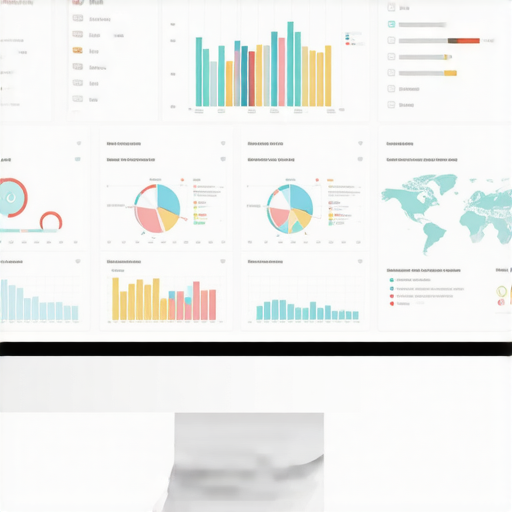

I remember the first time I looked at a cluttered, confusing KPI dashboard during a client presentation. It was late in the afternoon, my stomach was growling, and yet, I had to make sense of an avalanche of data that just wouldn’t cooperate. That moment of panic turned into a lightbulb: what if just a few tweaks could transform my reports from overwhelming to insightful—and save me hours of back-and-forth explanations? That’s the power of smart KPI visualization. And trust me, these small adjustments are game-changers.
Your Metrics Should Work for You, Not Against You
If you’ve ever struggled with reporting software that feels more like a maze than a tool—rendering your key metrics almost useless—you know the frustration. To make matters worse, relying on generic dashboards or PDFs often means missing critical signals early, leading to missed opportunities or misguided strategies.
Over the years, I’ve learned that refining our KPI visuals isn’t just about making reports look pretty; it’s about designing them in a way that emphasizes clarity, relevance, and actionability. Implementing these tweaks has helped me cut report preparation time in half and significantly improved client retention, because they actually understand what’s happening—and why it matters.
Is Your Data Really Telling the Truth?
Early in my career, I made the mistake of accepting KPI dashboards at face value. Turns out, many tools have hidden pitfalls—like data leaks or misinterpreted metrics—that can mislead even the most diligent agency. According to research, up to 20% of reported data could be inaccurate due to tracking errors or misconfigured settings. That’s a staggering figure that underscores the importance of precise visualization and validation.
So, if you’ve ever wondered whether your KPIs are truly reflecting reality, you’re not alone. The good news is that with a few strategic tweaks—like filtering out fake leads with effective Google Business Analytics reviews, or cleaning data with simple yet overlooked fixes—you can greatly enhance your report quality. For more insights, check out this guide on mastering actionable SEO insights in 2025.
Next, we’ll dive into practical tweaks—step-by-step—to turn average KPIs into powerful storytelling tools that keep clients engaged and your agency thriving in 2026. Ready to refine your visual strategy and start turning data into your biggest asset? Let’s get started.
Start with Accurate Data Collection
Before customizing your KPI visuals, ensure your data sources are reliable. For local SEO, double-check your Maps Rank Tracking data is free from drift errors by implementing fixes outlined in this guide on reporting software improvements. Use Google Business Analytics to gather lead conversion info, but verify that filters are correctly set to eliminate fake leads, as explained in this article on filtering.
Customize Visuals for Clarity and Impact
Think of your dashboard as a dashboard of a car. Just as clear gauges prevent misjudgments while driving, well-designed KPIs prevent misinterpretations in reports. Use color-coding—green for growth, red for decline—to instantly convey performance shifts. Incorporate sparklines or mini-charts to show trends without cluttering the page. For instance, a snippet of Maps Rank changes over the past week can be visualized with simple line charts, making it easier to spot patterns at a glance. Dive into [KPI visualization strategies](https://localseoreportpro.com/kpi-visualization-strategies-for-effective-seo-campaigns-in-2025) for more insights.
Simplify Complex Data with Filters
Complex datasets need streamlined views. Use filters in your Google Business Analytics to segment data by location, device type, or search intent, revealing hidden opportunities. For example, isolating traffic from mobile devices in a particular city can show how well your mobile SEO is performing, directing your next optimization step. The right filters can turn overwhelming tables into actionable insights—saving hours during report creation and boosting decision-making speed.
Implement Automation to Save Time
Manually updating every KPI report is like rowing a boat against the current. Instead, automate data pulls, dashboard refreshing, and report generation using SEO reporting software features mentioned in this automation guide. Set up scheduled updates to keep data fresh, so your reports reflect the latest insights without extra effort. Automation allows you to focus more on strategic analysis rather than tedious data collection.
Use Maps Rank Tracking as Your North Star
Maps rankings provide hyper-local insights that traditional organic KPIs might miss. Visualize your local map positions over time, highlighting areas of improvement or decline. Fix map drift issues by applying strategies from this article on map fixes. Over a month, consistent tracking and visualization of pin movements help you quickly identify which local SEO tactics are working. Remember, a visual map can often tell more compelling stories than raw numbers alone.
Link Insights to Actions Immediately
Every KPI should hint at what to do next. When a keyword’s map ranking drops, don’t just note it—investigate with detailed filters and visual comparisons. For example, a sudden dip in local pack rankings can be linked to review counts or Google Business Analytics sessions, exposing causality. Use these actionable visuals to communicate urgent issues or opportunities to your team or clients in real time, preventing misaligned strategies.
Many marketers and agencies often think that choosing the right SEO reporting software is a straightforward process: pick a popular tool, plug in your data, and let it do the rest. However, in my experience, this oversimplification can lead to significant pitfalls, especially when it comes to KPI visualization, maps rank tracking, and leveraging Google Business Analytics effectively. Let’s dig deeper into what most overlook and how to avoid common traps.
Are You Falling for the #1 Myth About SEO Tools? Understanding the Nuance
One prevalent misconception is that all reporting software offers equally accurate data. The reality is, many tools struggle with data integrity, especially when dealing with local SEO metrics or map-based rankings. For instance, certain platforms may not account for proximity bias in local pack rankings, leading to distorted insights if not properly validated. According to a study by Moz, 60% of SEO professionals acknowledge data inconsistency as a major challenge in their reporting processes. Relying solely on raw data without critically assessing its validity can cause misguided strategies. Instead, focus on tools that provide detailed diagnostics or validation features, like those highlighted in this article on map data accuracy. Ensuring your data’s integrity before visualization is vital for credible insights.
Another sneaky trap involves KPI visualization. Many overlook the importance of context—especially in high-stakes reporting to clients. For example, a spike in local map rankings might seem promising, but without understanding if it’s due to seasonal trends, algorithm updates, or tracking errors, the insight is misleading. Effective KPI dashboards should incorporate filters and trend analyses that reveal real causality. You can learn more about turning raw metrics into actionable insights by exploring this deep dive on KPI visualization strategies. This ensures your reports not only look compelling but also tell trustworthy stories.
Moreover, many overlook the importance of integrating maps rank tracking with analytics such as Google Business Insights. This integration is crucial for hyper-local SEO, yet often, agencies treat these as separate entities. When combined properly, they uncover subtle patterns—like how review volume influences local rank stability—that would be missed in isolated reports. As emphasized in this resource, blending data sources enhances decision-making and client satisfaction.
What about automation? Many assume that scheduling reports guarantees accuracy and efficiency. While automation reduces manual effort, neglecting to set up data validation or monitoring alerts can lead to propagating errors. The key is to implement automated checks that flag anomalies—especially crucial during new algorithm updates or when tracking local pack fluctuations. Discover more about automating your SEO audits to maintain data quality without sacrificing time.
In conclusion, a nuanced understanding of these tools and their limitations—coupled with advanced validation, contextual KPI visualization, and integrated data analysis—can elevate your SEO reporting from mere numbers to strategic assets. Do you see yourself falling into any of these traps? Let me know in the comments!
**Remember**: Mastering deeper nuances will give you a competitive edge in your SEO campaigns. For comprehensive strategies, check out this guide on actionable SEO insights.
Maintaining effective SEO reporting and KPI visualization over the long haul requires more than just choosing the right software; it demands consistent routines, reliable tools, and proactive strategies. I personally rely on a combination of cutting-edge platforms and time-tested methods that ensure my data remains accurate and insights actionable. For instance, SEO reporting software with robust automation features saves me hours each week by automatically pulling data and generating customizable dashboards, freeing up my team to focus on strategic analysis.
Beyond software, I emphasize the importance of dedicated data validation processes. Regularly cross-checking data points with direct platform insights, like those from Google Business Analytics, helps prevent errors from sneaking into reports. This ensures that insights are not only timely but also trustworthy.
From my experience, integrating advanced maps rank tracking tools into your workflow provides hyper-local visibility, which is crucial for small businesses aiming to dominate their neighborhoods. These tools often come with features that help identify pinch points, monitor pin drift, and visualize ranking spikes—critical for maintaining long-term local SEO success.
Moreover, leveraging intelligent KPI visualization strategies allows me to quickly spot trends and deviations. Clear, contextual visualizations make it easier to communicate complex data to clients, and in turn, foster trust and clarity for ongoing SEO efforts.
Looking ahead, I anticipate that automation and integration will become even more vital. Trend predictions suggest that future tools will seamlessly combine data validation, real-time monitoring, and predictive analytics—all within a unified dashboard. This synergy will make long-term maintenance not just feasible but effortlessly scalable.
How do I keep my SEO tools and reports working consistently?
My approach involves routine audits—weekly checks of data integrity, quarterly updates of tracking configurations, and continuous learning about new features in my software stack. I also build workflows that include automatic alerts for anomalies, so I can address issues before they impact insights. For example, setting up automated checks for sudden drops in map rankings with these proven tactics keeps my data trustworthy over time. If you want to elevate your maintenance routines, I recommend trying out some of the advanced strategies discussed here and integrating them into your SOPs.
The Unexpected Wisdom I Gained from Client Data Mishaps
One of the most eye-opening lessons I learned was the importance of trusting validated data over assumptions, especially when visualizing KPIs. I realized that even the most sophisticated dashboards fall apart if the data isn’t meticulously vetted, which often leads to misguided strategies. Embracing continuous validation routines and staying updated with the latest validation techniques can prevent costly mistakes and build confidence with clients.
My Arsenal for Effective Local SEO Reporting
Over time, I found that combining top-tier tools like top SEO reporting software, advanced KPI visualization techniques, and maps rank tracking hacks enhances my ability to deliver actionable insights. Trust in these tools stems from their proven track record in providing accurate, timely, and comprehensive data that I can confidently present to clients.
Believe in Your Data and Your Voice
Confidence in your insights transforms the client-agency relationship. When data is accurate and visualized effectively, it becomes a persuasive narrative that demonstrates value and fosters trust. I urge you to continuously refine your data validation routines and visualization skills. Remember, your ability to interpret and communicate insights can make or break your reputation in local SEO circles. If you want to take your reporting to the next level, explore this resource to discover automation features that streamline your workflow, ensuring accuracy and efficiency in every report you deliver.