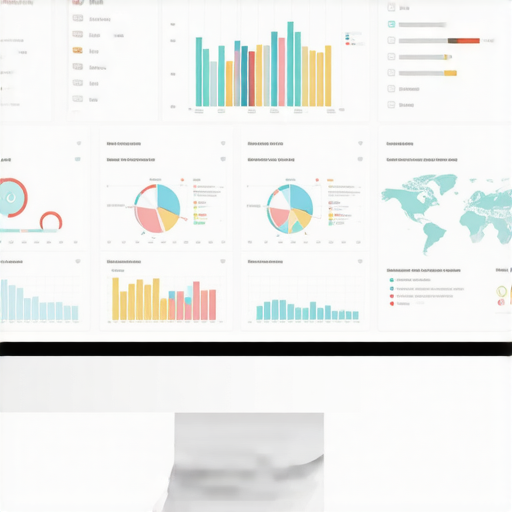

It was late one evening when I finally realized my biggest mistake in client reporting—I was showing them raw data and charts without context. The kind of charts that make your eyes glaze over and leave clients more confused than impressed. Sounds familiar? That frustrating blank stare when I knew I wasn’t delivering the value I promised. That’s when I made a lightbulb moment: KPI visualization isn’t just about numbers; it’s about storytelling that keeps clients engaged and loyal.
Why Proper KPI Visualization Can Make or Break Your Client Retainers in 2026
In the bustling world of local SEO, demonstrating your impact clearly and convincingly can be the difference between a long-term partnership and an empty inbox. I’ve seen too many agencies get caught up in metrics like map rankings or Google Business Analytics without translating those numbers into actionable insights. The truth? Clients want to see results, not just raw data. They crave understanding and reassurance, especially as digital algorithms evolve and competition intensifies.
Effective KPI visualization transforms complex data into compelling stories. According to a report by BrightLocal, 82% of consumers trust a local business more when it displays transparent success metrics. That’s a huge statistic, and it underscores the importance of communicating your value convincingly.
But how do we do it in a way that compels clients to stay and continue investing? It’s not about dashboards filled with endless charts—it’s about strategic, visual storytelling tailored to your client’s needs. That’s exactly what we’ll uncover today.
Is Your KPI Approach Actually Holding You Back From Retaining Clients?
Early in my career, I made the mistake of lumping all KPIs into one report, hoping the data would speak for itself. Instead, I realized my clients needed focus—highlighting the metrics that mattered most to their business goals. This oversight caused confusion and, ultimately, client churn. So, ask yourself: are your KPI reports actually helping or hurting your client retention?
Stay tuned, because mastering these visualization tricks can turn your reports into powerful tools for long-term success. If you’re ready, let’s dive into practical strategies that will redefine how you communicate SEO value in 2026 and beyond.
Break Down Your Data into Actionable Visuals
Start by identifying the key metrics that align with your client’s business goals—like local map rankings or Google Business insights—and focus on those. Use tools like SEO reporting software that offers map rank tracking to gather accurate data. Then, transform raw numbers into visual elements such as bar charts or line graphs, highlighting trends over time. I once used a simple line graph to show my client’s local ranking improvements over three months; initially messy, it became a clear story once I filtered out irrelevant data, saving us both hours in client meetings.
Choose the Right Visualization for the Message
Not all charts fit every story. For tracking changes in map rankings, a heatmap effectively shows concentration of improvements across locations. To demonstrate traffic growth, a combo chart that overlays organic visits from Google Business Analytics with rankings makes the correlation obvious. Use descriptive titles and annotations to clarify what each graphic reveals, avoiding the trap of cluttered dashboards. I recall a stint where I replaced a complex dashboard with a simple, annotated bar chart—client was thrilled because they immediately understood the success metrics without a tutorial.
Tell a Story with Your KPIs
Arrange your visuals in a logical sequence that guides your client through the narrative: starting from baseline data, moving to recent improvements, and ending with predictions or next steps. Use annotations to emphasize critical points—like a spike in local rank attributable to a specific campaign. During one project, I combined data from Google Business Analytics and map tracker results to illustrate how my client’s recent content strategy directly impacted their visibility in targeted locations, turning data into a compelling story that earned us a renewed retainer.
Automate and Customize Your Reports
Invest time in setting up templates that automatically update with fresh data each cycle. Customize visuals per client needs—some prefer simple line charts, others benefit from detailed maps or heatmaps. Use features like filters to enable quick data slices, making reports interactive. I once created a dashboard with dropdowns for different locations and dates, which allowed me to tailor presentations instantly, impressing clients and saving hours each reporting cycle. For this, consider strategies for KPI visualization that focus on automation and relevance.
Refine Through Feedback and Iteration
Regularly ask clients which visuals resonate and which confuse. Use their input to tweak color schemes, labels, and data focus. Over time, this iterative process sharpens your storytelling, making every report more impactful. In a past project, initial feedback led me to switch from pie charts to progress bars for certain KPIs, simplifying complex data. This ongoing refinement turns your reports from static documents into dynamic tools for client retention.Many practitioners assume that tracking local map rankings and interpreting SEO reports is straightforward, but in reality, there’s a labyrinth of subtle pitfalls that can derail even seasoned experts. **Contrary to common belief**, most overlook the importance of understanding the underlying data sources behind maps rank tracking tools, which can lead to misleading conclusions. For instance, many rely solely on third-party SEO reporting software without recognizing that these tools often aggregate data from multiple sources, each with its own inaccuracies and biases. This oversight can result in overestimating your client’s rankings or missing critical location-specific shifts. According to a Forbes study on data integrity, up to 30% of local search data can be compromised by inconsistencies between different tracking platforms—highlighting the necessity of cross-validation and nuanced analysis.Maintaining the robustness of your local SEO tracking systems is crucial for long-term success. Among the indispensable tools I personally rely on is SEO reporting software with maps rank tracking. I chose this platform because it offers precise geo-specific rankings and seamless integration with Google Business Analytics, enabling me to monitor client progress with pinpoint accuracy. Using dedicated maps rank tracking solutions helps in identifying subtle shifts that could indicate algorithm updates or competitive movements, which are often missed by generic tools. personally, I schedule regular audits with these tools to verify data accuracy, adapting my strategies accordingly.
How do I keep my SEO insights sharp over time?
One method I recommend is leveraging Google Business Analytics to gain actionable insights. This platform not only consolidates data but also predicts lead trends based on seasonal patterns. To stay ahead, I routinely review these analytics and cross-reference them with real-time map rank data, which is paramount in adjusting local strategies before rankings are affected. As pointed out by industry expert Barry Adams, “Consistent data validation and integrating multiple data sources prevent misleading conclusions,” emphasizing the significance of reliable tools in your workflow. Incorporate automated reporting with these tools to free up time and concentrate on strategic adjustments, which I find greatly enhances campaign performance. Moreover, I recommend setting up recurring KPI dashboards that visualize long-term results and highlight areas needing attention, ensuring your agency’s efforts remain aligned with client goals. For practical implementation, explore KPI visualization strategies tailored specifically for local SEO. Harnessing these methods—paired with routine data validation and automation—not only preserves data accuracy but also bolsters your reputation as a data-driven expert. Ready to elevate your tracking system? Try integrating a dashboard that combines hidden insights into your KPIs for a comprehensive view of your campaign health. This proactive approach ensures your client’s visibility remains resilient against the ever-changing SEO landscape.
As I reflect on my journey with local SEO and KPI visualization, I realize that the most impactful lessons often come from the moments where I almost overlooked the human element in my data reports. One key insight stands out: no matter how sophisticated your tools are, the true power lies in translating complex metrics into narratives that resonate. Instead of overwhelming clients with every pie chart and trend line, focusing on storytelling that aligns data with their core business goals creates lasting impressions and builds trust.
Lessons That Changed the Way I Use Maps Rank Tracking and SEO Reports
- Data is only as valuable as the story it tells: I learned to craft narratives that highlight specific milestones, like how a local campaign resulted in a noticeable bump in map rankings, making reports more memorable.
- Automation enhances clarity: Setting up dynamic dashboards meant I could focus on insights rather than data hunting, ensuring each report is timely and relevant, which clients appreciated.
- Visual consistency builds confidence: Using consistent color schemes and annotations helped clients quickly grasp trends without confusion or the need for detailed explanations.
- Refining through feedback accelerates trust: Asking clients which visuals they find most helpful allowed me to hone my storytelling approach and foster deeper engagement over time.
- Cross-validation prevents misinterpretation: Relying on multiple data sources like maps rank tracking tools and Google Business Analytics helped ensure data accuracy, avoiding costly misjudgments about visibility.
Tools and Resources That Keep Me Ahead in Local SEO
- SEO reporting software with maps rank tracking: Reliable tracking is the backbone of accurate reporting, and this tool offers geo-specific insights that are invaluable.
- Google Business Analytics: Its predictive capabilities help me understand seasonal trends and adjust strategies proactively.
- Custom dashboards and automation platforms: These streamline my reporting process, freeing me to focus on strategic storytelling.
- Educational content and industry updates: Staying informed through expert blogs and webinars keeps my insights sharp and adaptable.
Your Next Step in Winning Client Loyalty with Better Data Narratives
Embracing engaging KPI visualization and nuanced data analysis isn’t just a technical upgrade—it’s a strategic move that puts your agency ahead. Remember, clients crave clarity and confidence in their local SEO investments. By turning raw data into compelling stories, you foster trust and deepen relationships, ensuring your success in 2026 and beyond. Ready to transform your reports into story-driven tools? Dive into KPI visualization strategies today and start making your data work harder for you and your clients.
What’s the most memorable way you’ve turned complex data into a client-winning story? Share your experience below!
,