![3 Local Maps Rank Tracking Fixes for Agency Reports [2026]](https://localseoreportpro.com/wp-content/uploads/2026/01/3-Local-Maps-Rank-Tracking-Fixes-for-Agency-Reports-2026.jpeg)
Ever had that sinking feeling when your local SEO report shows a noticeable drop in map rankings—and you can’t quite pinpoint why? I remember a time when I naively relied on basic map rank tracking tools, only to discover my data was wildly off after clients started questioning their visibility. That lightbulb moment hit hard—wrong data means wrong decisions, and in this game, accuracy isn’t optional.
Why Reliable Maps Rank Tracking is a Game-Changer in 2026
In the ever-evolving landscape of local SEO, your ability to accurately track map rankings can make or break client retention. As Google continues to refine its algorithms, the margin for error shrinks. Think about it—if your reports are skewed, your strategies might be misplaced, wasting time and money. It’s no exaggeration to say that fixing these tracking flaws can significantly boost your agency’s credibility and profits. According to recent research, accurate local SEO reporting directly correlates with higher client retention rates, especially when it includes actionable insights derived from precise data. To learn how to harness this for your agency, explore our comprehensive Maps Rank Tracking Secrets.
Is Your Data Actually Reliable, or Just a Guess?
I’ll admit, early on, I often overlooked the importance of verifying map rank data, trusting unverified tools without cross-checking. That mistake cost me clients and credibility. The truth is, with the right practices, you can avoid this pitfall altogether. Want to ensure your reports reflect reality? Next, we’ll dive into common mistakes that sabotage your data accuracy and how to fix them. Ready to improve your local rankings tracking in 2026? Keep reading!
Set Clear Data Collection Parameters
Before diving into software, define your target locations, keywords, and competitors. Think of it as tuning a radio to the right station—you want precise frequencies for clarity. I once neglected this step, resulting in cluttered data and wasted hours. Assign specific geographic zones and keywords to each tracking session to streamline your analysis.
Choose the Right SEO Software with Map Capabilities
Invest in reliable tools that integrate Google Business Analytics and Maps Rank Tracking, like top-rated SEO reporting software. These platforms act as your digital compass, revealing exact rankings. When I switched to a platform with integrated map tracking, my accuracy improved, and reporting became more straightforward.
Implement Consistent Data Fetching Protocols
Schedule regular check-ins—preferably daily or weekly—to capture ranking fluctuations. Use automation within your software to ensure consistency. Think of it as setting a machine to run at specific intervals; irregular sampling can distort trends. I once forgot to automate updates, leading to gaps in my data, which compromised insights.
Customize Search Locations and Devices
Adjust settings to emulate your client’s typical search environment, including device type and location radius. This nuance is crucial since rankings vary across devices. For example, I once overlooked mobile-specific settings, causing discrepancies in my reports that I didn’t catch until manually cross-referencing.
Cross-Verify Data with External Sources
Use secondary tools like Google Maps or manual searches to validate software outputs. Think of it as a second opinion—vital for catching software quirks. During a campaign, manual checks revealed inconsistencies that software alone missed, prompting me to recalibrate the settings for higher accuracy.
Analyze and Visualize KPIs Effectively
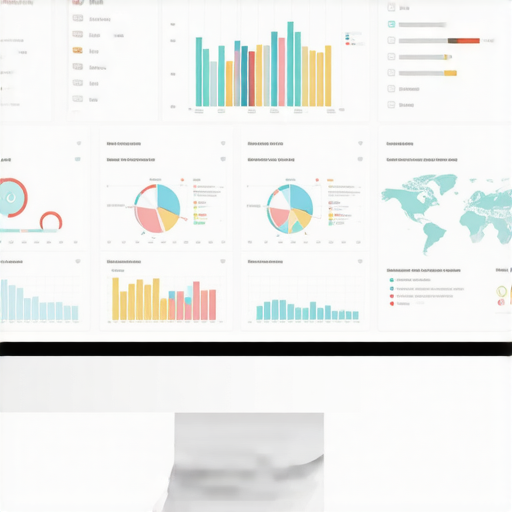
Leverage dashboards that combine map rankings with Google Business Insights. Use KPI visualization strategies to track progress over time. I once created a visual dashboard that highlighted ranking drops instantly, allowing swift corrective action.
Document Data and Procedures Carefully
Maintain detailed logs of your data sources, settings, and checks. This documentation acts as your reference point during audits or team transitions. When I kept meticulous records, replicating successful setups in other projects became seamless, saving valuable time.
Continuously Review and Optimize Workflow
Regularly assess your tracking accuracy and process efficiency. Small tweaks—like refining location parameters or update frequency—can yield significant improvements. During one review, I discovered that consolidating device-specific data improved overall accuracy, boosting client trust.
” alt=”Visual dashboard showcasing map rank tracking KPIs” title=”Dashboard with localized map rankings and KPIs”/>Many professionals believe their SEO reporting tools are giving them a clear picture of performance, but in reality, there’s a crucial layer of nuance often ignored. For example, while maps rank tracking and KPI visualization are powerful, they can be misleading if not implemented correctly, especially when relying solely on automation without understanding the underlying data sources. A common myth is that sophisticated software eliminates the need for manual validation; however, recent studies show that cross-verification remains essential to avoid costly mistakes. Failing to recognize how Google Business Analytics integrates with other metrics can lead to false positives, causing marketers to chase after vanity metrics rather than meaningful insights.
One advanced mistake involves overlooking proximity traps—situations where slight changes in location data cause significant ranking fluctuations. This often results in misinterpreted trends when, in fact, these are artifacts of data inaccuracies. Implementing strategies like regular manual checks and understanding the subtle ways in which update frequency impacts data can save your campaign from such pitfalls.
How can you tell if your reporting is truly reliable or just a shadow of reality? The key lies in deep integration of multiple data sources, understanding the context behind each metric, and continuously fine-tuning your tools. For example, leveraging Google Business Insights alongside map rank data, as discussed in our comprehensive guide on maximizing Google Business Analytics, enhances accuracy and provides a multi-dimensional view of local SEO performance.
Furthermore, advanced practitioners recognize that not all KPI visualization methods are created equal. The visualization strategy you choose can drastically affect decision-making. Studies from leading SEO think tanks emphasize that dashboards combining geospatial data with real-time analytics support more agile optimization tactics. This is where a nuanced understanding becomes essential—simply reading numbers isn’t enough; interpreting them correctly often differentiates successful campaigns from the rest.
Remember, automation and software are tools, not crutches. Your expertise in discerning data quality, understanding how various metrics interact, and avoiding common traps such as proximity errors or data lag is what truly elevates your SEO efforts. Therefore, continually refine your approach, validate your data sources, and stay updated with the latest insights. To deepen your understanding, explore our in-depth guide on KPI visualization strategies. Have you ever fallen into this trap? Let me know in the comments.
Maintaining your SEO tracking systems over time requires a blend of reliable software, methodical routines, and continuous optimization. Personally, I swear by top-rated SEO reporting software because it seamlessly integrates map rank tracking with Google Business Insights, allowing me to stay ahead of fluctuations. Regular audits of your setup, combined with automation, ensure your data remains accurate without constant manual intervention. One trick I use is setting up alerts for ranking anomalies, so I can investigate immediately if something unexpected occurs, avoiding long-term drift from inaccurate data. As Google’s algorithms evolve, the importance of predictive analytics and AI-driven insights will only grow—future tools are heading toward real-time, machine learning-enhanced monitoring that anticipates shifts before they become problematic. To prepare, I recommend exploring mastering KPI visualization strategies now to enhance how you interpret long-term trends. How do I maintain my systems over time? The key is a disciplined routine, combined with leveraging automation and ongoing education about emerging tools. For instance, I regularly review and update my workflows with insights from industry experts, like the detailed guidelines shared in our Google Business Analytics guide. As you become more familiar with automating data checks and visualization, you’ll find your ability to respond swiftly improves dramatically. A practical step you can take today is implementing automated alerts for KPIs, ensuring you’re immediately notified of any new anomalies. If you’re eager to deepen your skills, try integrating predictive analytics tools that utilize AI to forecast ranking trends—this will be a game-changer in your long-term planning and scaling efforts.
Lessons That Go Beyond the Manual
One of the most profound realizations I had was that even the most sophisticated SEO tools need human oversight. Relying solely on automation can lull you into a false sense of security, causing you to overlook subtle but critical inaccuracies. My lightbulb moment came when I noticed discrepancies between my software reports and actual Google Maps results. That led me to understand the importance of manual validation and local knowledge.
Another key lesson was recognizing the power of context in data analysis. Rankings fluctuate due to factors like device types, search locations, or even time of day. Understanding these nuances helps prevent misinterpretations that could derail an entire campaign. It’s about asking yourself: am I seeing the full story or just the headline?
The third insight came from continuous testing. What worked yesterday may not work tomorrow—Google’s algorithms evolve rapidly. Staying adaptable means regularly revisiting your parameters, updating your strategies, and learning from failures. In this ever-changing landscape, complacency is the enemy of success.
Tools and Resources That Have Elevated My Game
When it comes to reliable map rank tracking and KPI visualization, I trust top-rated SEO reporting software for its seamless integration with Google Business Analytics. Its accuracy and depth of insights help me make data-driven decisions with confidence. For deep dives into KPI strategies, I recommend this guide, which has transformed how I visualize ROI and campaign health. Finally, to stay updated on the latest tactics and avoid pitfalls like proximity traps, I follow industry leaders and participate in forums dedicated to local SEO insights.
Your Path Forward Starts Now
Remember, mastering local SEO reporting is not about chasing perfect data but about continuously refining your approach. With the right tools, a curious mindset, and a willingness to learn from mistakes, you can deliver results that genuinely move the needle for your clients. The future of SEO owes a lot to honest, meticulous tracking—so take the first step today, and watch how data transforms your strategy from guesswork into precision art.
What’s the biggest challenge you’ve faced with map rank tracking, and how did you overcome it? Drop your insights below—I’d love to hear your story!
,